What AI Code Review Bots Miss in Real Web Apps
- AI Code Review
- Web Security
- Code Quality
- AI Coding Agents
Automated review bots promise a safety net for teams shipping fast with AI coding agents. The real question is whether that net holds where the risk actually sits. Seed a realistic app with deliberate defects and run several reviewers over it, and a pattern appears: they catch textbook issues, miss the subtle ones, and sometimes raise alarms about code that is perfectly fine.
Authentication is not authorization
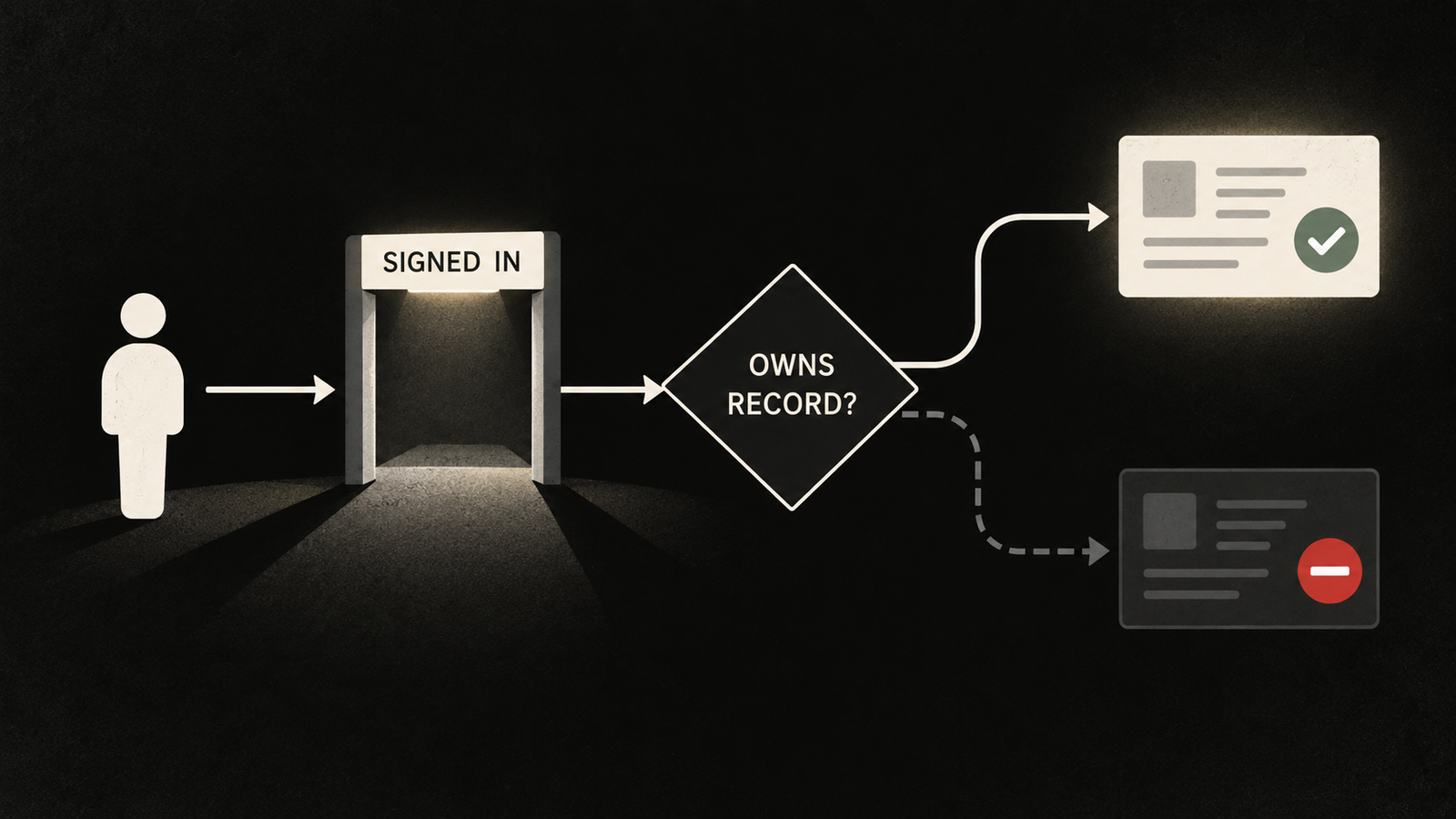
The most instructive defect is easy to write and easy to skim past. A query confirms that the user is signed in, then loads a record by its id, and never checks that the record belongs to that user. Any signed-in person could read someone else's data. Most reviewers flagged this one, which is encouraging, but it is exactly the kind of flaw that slips through when agent output is merged quickly.
Two related mistakes belong in the same checklist. A public function that was only meant to run on a schedule should be an internal function that clients cannot call. An export endpoint that never checks identity at all is the same family of problem. Any reviewer, human or automated, should ask one question of every entry point: who is allowed to call this, and for which records?
Growth problems that only appear later
A second group of defects works fine in a demo and fails with real data:
- Reading every row of a table that keeps growing, instead of bounding the read.
- Counting records by loading all of them, instead of maintaining a count or using a purpose-built aggregate.
- Storing a list that can grow without limit inside a single record, where a separate table would be safer.
- Changing data without updating a derived aggregate that depends on it.
- Funnelling every write in the system through one shared counter, which invites write conflicts under load.
Automated reviewers were uneven on these. Some caught the unbounded read, fewer caught the forgotten aggregate update, and conflict-prone writes were noticed mainly when the design was made very obvious. Agents tend to repeat these patterns, so they deserve explicit checks in a review routine.
False positives and the cost of missing context
Noise is the other half of the story. Reviewers shaped by conventional serverless code flagged repeated database reads as an N+1 problem in a platform where data and compute sit together and the whole query runs as one transaction. Others warned about missing authentication on internal functions that are never exposed to clients. Every false alarm teaches the team to ignore the bot.
Context is the common thread. Reviewers rarely read the project's own rules files, even when those files described the conventions that would have prevented the misses. That points to a practical response:
- Write framework conventions and security expectations into files in the repository, and keep them current.
- Tell reviewers explicitly when a function is internal or an unusual choice is deliberate.
- Judge any tool by what it misses and what it wrongly flags, not by how much commentary it produces.
What this means for your build
Review bots are a useful first pass, not a replacement for an engineer who understands the data model. At Curiosive, senior engineers read every line, and automated review simply gives them a head start. For founders choosing how to build, the lesson is to ask how ownership checks, growth limits and framework-specific behaviour are verified before launch, because those are the defects that cost the most later.
Frequently asked questions
Can AI code review catch authorization bugs?
Often, but not reliably. Most automated reviewers flagged a query that checked sign-in but never checked record ownership, yet this class of bug still needs a human to ask who may call each entry point and for which records.
Why do AI code review tools give false positives?
They lack context about your platform and conventions. Reviewers shaped by conventional serverless code flagged repeated reads as N+1 problems where data and compute sit together, and warned about authentication on functions that are internal only.
What performance problems do AI coding agents repeat?
Unbounded reads, counting by loading every row, lists that grow inside one record, forgotten aggregate updates and a single shared counter written by every request. Each works in a demo and fails with real data.
How do I get better results from an AI code reviewer?
Give it context. Write framework conventions and security expectations into files in the repository, state clearly when a function is internal or a choice is deliberate, and judge the tool by misses and false alarms.
Should AI review replace human code review?
No. It works as a first pass that gives engineers a head start, while a senior engineer who understands the data model still reviews every line before release.
Put this into practice
Explore the services related to this article.
A short note about the product, the timeline and who it is for is enough to start. You will hear back from the engineer who would do the work, not a sales team.
Start a partnership