AI integration

AI Integration for Existing Products

The first question in most AI conversations is which model to use. That is rarely what decides the outcome. What decides it is which workflow you are automating and what data the model is allowed to see. Curiosive is a software studio run from Ankara, Türkiye, shipping production software for more than five years, with 16 live products. In several of them AI is not a feature bolted on the side, it is the product.

This work usually runs as a defined piece inside a product that already exists. Teams that want continuous development use our retainer at $800 per month for 20 hours. If a new module has to be built from zero, MVP pricing starts from $5,000. Both are starting points, and the exact scope is agreed in writing after a discovery call.

01

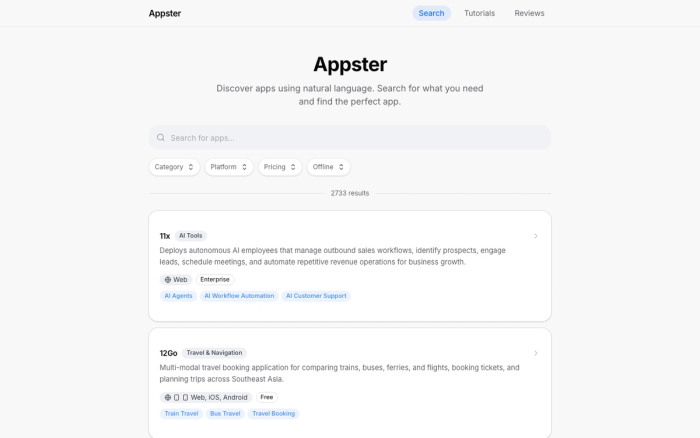
Natural language search: Appster

Appster (https://appster.com) lets people describe what they want and find apps across a catalogue of more than 2,700, built with Next.js, Supabase, OpenAI and a vector database. The defining decision was to compute embeddings ahead of time and store them, rather than calling a model on every search. That cuts both response time and running cost. The trade-off is real: when content changes you now need a process that refreshes those vectors. The same shape works for product catalogues and documentation search.

02

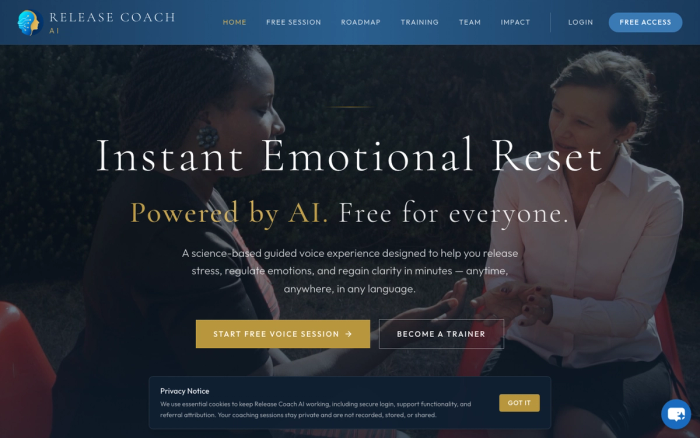
Voice AI and the latency budget: Release Coach AI

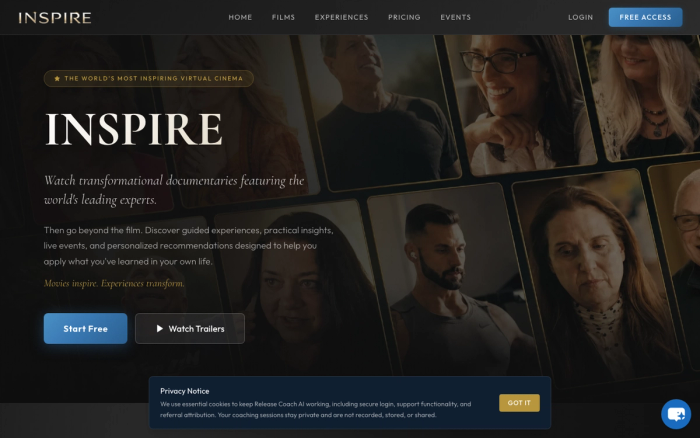
Release Coach AI (https://releasecoach.ai) runs AI-guided voice sessions in real time, in any language, with the audio layer built on LiveKit. In a text assistant a two second pause is acceptable. In a spoken conversation the same pause breaks the interaction, so architecture decisions here are made against a latency budget: responses stream instead of arriving whole, and intermediate steps run in parallel wherever the ordering allows. Whether sessions are recorded at all was handled as a privacy decision, separately from the technical one.

03

Agents and where their authority stops: YouNet

YouNet (https://younet.ai) offers plug and play AI agents for customer support, SEO, social media and data analysis. In products like this the difficulty is not getting a model to produce an answer. It is defining which actions an agent may take alone and which need a human in the loop. Sending a customer a message and deleting a record are not the same level of risk. So permission boundaries, approval steps and an audit trail of every action taken are built as product features, not added after an incident.

04

What the model does and what an engineer does

Our approach is AI-first but engineer-led. Most of the code is written with AI assistance, while the data model, authentication, authorization, payment paths and the security review stay with senior engineers. AI integrations add three things teams routinely skip: tests that show whether a prompt change broke the output, hard ceilings on usage cost per user and per account, and defined fallback behaviour for when the provider is slow or down. Without those a demo works and production does not.

Questions

The things people ask before starting.

Can AI be added to software we already run?

Usually yes. We start by identifying which workflow actually benefits, then define what data the model can reach and under what permissions. The integration lives inside your existing codebase, so this is not a reason to rewrite a product that is already working.

Which model or provider do you use?

It depends on the problem. We have shipped with OpenAI and Grok AI, and the choice follows the task and the cost expectation. We keep the architecture from being locked to one vendor, so a change in price or quality does not force a rewrite months later.

How is AI usage cost kept under control?

Repeated queries are cached, search-style features use precomputed vectors instead of live model calls, and per user and per account ceilings are defined. Usage is reported so cost stays predictable as traffic grows, which is how you avoid an invoice nobody forecast.

Will our data be used to train models?

That depends on the provider you choose and the agreement you sign with them. During setup we make the data retention and training settings explicit. We also decide together which fields never reach the model at all, since sensitive values can be stripped from the request.

Contact

Looking for an engineering partner for the long haul?

A short note about the product, the timeline and who it is for is enough to start. You will hear back from the engineer who would do the work, not a sales team.

Ankara / Türkiye · Working across European and US time zones