Agentic software engineering

Agentic software engineering with senior engineers in charge

The hard part of using coding agents on production software is not getting code written. An agent will produce a plausible diff for almost any task. Someone still has to work out whether it respected the permission model, touched a payment path or changed a query the rest of the product depends on. A missing ownership check on one endpoint, or a webhook handler that charges a customer twice, can pass every test in the suite and still reach customers.

Curiosive is an AI-native software studio in Ankara, Türkiye, building and maintaining production software with AI coding agents under senior engineer review. Agents do the volume: scaffolding, migrations, test coverage and refactors that touch hundreds of files. Engineers own the boundaries: data models, authentication, permissions, payment paths and anything touching personal data. This page sets out how that division works in practice, for teams across European and US time zones working with us on Türkiye business hours.

24
products shipped and running
5+
years building for production
12
countries the work runs in
100%
of code read by a senior engineer
1 day
to hear back, from the engineer

What a coding agent does in a software engineering project

We use Claude Code and Cursor as coding agents, and they work inside the client's repository rather than in a chat window. Given a task, the agent reads the surrounding code first: the module it will change, the types it depends on and the tests that already cover it. It then plans the change, implements it, writes or updates tests, and runs the type checker, linter and test suite before proposing anything. The work it suits is wide and repetitive: wiring a new field through an API handler, its validation schema, the TypeScript types and the admin form; writing the migration for a schema change an engineer has already designed; adding tests to a module that never had any; or renaming a concept across hundreds of files without missing a call site. What these tasks share is that a person has already made the design decision. The agent applies it consistently across many files, and the compiler and tests confirm that every call site was updated.
The task, agent, checks and review loop

Every change starts as a written task from an engineer. It states the acceptance criteria, the part of the codebase in scope and the boundaries the agent must not cross, for example: leave the auth middleware alone, do not change the schema, add no new dependency. The agent works through the task and comes back with a proposed diff and the results of its checks. A senior engineer then reads the whole diff, not a summary of it, and either merges it or sends it back with comments. Agents never merge their own work. Continuous integration re-runs the type check, linter and tests on every change, so nothing relies on the agent's own report that its checks passed. Around this loop the engagement stays simple: decisions are written down asynchronously, a releasable increment ships every week and there is one short weekly call.

What engineers never delegate to coding agents, and why

Some decisions are cheap to get right at the start and expensive to repair later, so they stay with a person. Data models come first. A table design shapes every query written after it, and an agent solving the task in front of it can add a nullable column where a separate table was needed. Authentication and authorisation come next, because a missing ownership check on one endpoint can expose another customer's records while every test still passes. Payment paths, from checkout to webhook handling, stay with engineers because a charge applied twice or not at all is a defect customers notice at once. Anything touching personal data, including logging, exports and retention, is designed and reviewed by a person as well. The security review itself is never delegated either. An agent can be asked to look for problems, but an engineer decides whether a change is safe to ship.

How software quality is checked before it reaches production

When agents write the volume, review gates matter more, because more code arrives each day than one engineer would type, and every line of it still has to be read. So the checks run in layers. Static checks come first: the TypeScript compiler, the linter and the unit tests, run by the agent and again in continuous integration. Behaviour comes next, with Playwright end-to-end tests that drive the real interface through the flows a product cannot afford to break, such as sign-up or checkout. Then a senior engineer reads the diff for what tooling misses: how secrets are handled, whether input is validated at the boundary, whether access control is enforced on the server and what risk a new or upgraded dependency brings. The result is code a client can keep: typed, tested and documented, and the client's from the first commit, with no lock-in to our tooling.

What agentic engineering changes about cost and timelines

Agents make the wide, repetitive parts of a project cheaper. Work runs as AI-accelerated development, starting from $2,000 per month, with scope agreed in writing. What agents do not shorten is the thinking. Discovery still means understanding the problem, the users and the constraints before any plan or estimate. Data model design, security review and decisions about what to build next take as long as they always did, and a release still waits for review. Our process reflects that: discover, put a first slice in production early, operate it, then compound, so each cycle leaves the codebase easier to change. Scope and budget are agreed in writing after a discovery call, and the prices we publish are starting points, not quotes.

Questions

The things people ask before starting.

What is agentic software engineering?

Agentic software engineering means building software with AI coding agents that read a repository, plan and make changes, and run the checks themselves, while engineers write the tasks and review the results. At Curiosive, agents such as Claude Code and Cursor do the volume, and a senior engineer reads every diff before it merges. Agents never merge their own work.

Can AI coding agents work on an existing or legacy codebase?

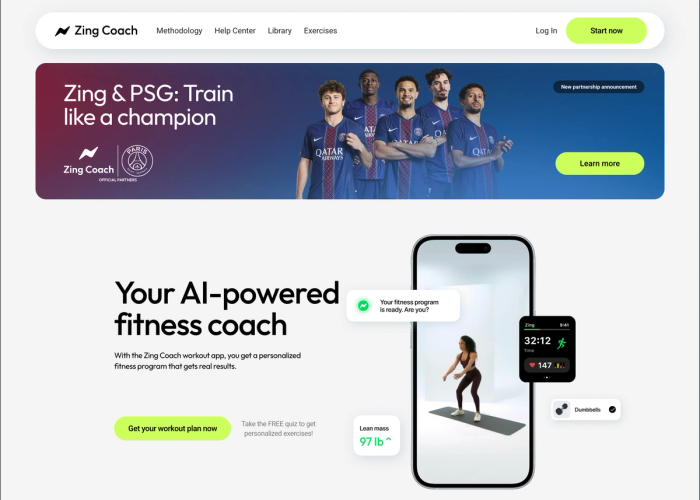
Yes, as long as an engineer scopes each task and reviews the result. An agent reads the surrounding code, types and tests before changing anything, and where coverage is thin, adding tests is a sensible first task. Our work on existing products includes reviving RateItAll (rateitall.com), a legacy ratings platform with more than 12 million reviews, rebuilding Zing Coach (zing.coach) from Webflow to Next.js and maintaining the Detailed SEO Extension through its acquisition by Ahrefs.

How many working hours does a studio in Türkiye share with US and European teams?

It depends on where you are. Ankara is UTC+3 all year, so a standard 09:00 to 18:00 day shares 6 to 9 hours with European teams, depending on country and season, 1 to 2 hours with US Eastern time and 0 to 1 hour with Central. There is none with Mountain, Pacific, Alaska or Hawaii time, so work runs on written async handoffs, with our working day falling during your night.

Do we need Standard Contractual Clauses if engineers in Türkiye access our EU personal data?

Plan for a GDPR transfer tool, such as the clauses in Decision (EU) 2021/914. As of 2 October 2026 Türkiye has no EU adequacy decision, and EDPB guidance treats remote access from a third country as a transfer when the criteria are met, even if data is only displayed for support. UK adequacy regulations do not cover Türkiye either; UK transfers can use the ICO's IDTA or its Addendum. It is worth confirming specifics with a lawyer.

Can a US company contract with a US entity and pay in dollars?

Yes. The legal entity behind Curiosive is Curiosive LLC, a company registered in New Mexico, so US clients can contract with a US company and pay in US dollars. The engineering is done remotely from Ankara, Türkiye. There is no long contract to begin, and the code is yours from the first commit, in repository, database and hosting accounts opened in your name or connected to accounts you already hold.

How it starts

What happens after you write to us.

  1. 01

    You describe the product

    One paragraph on what you are building, roughly when you need it, and who it is for. No brief, no form with fifteen fields.

  2. 02

    You get a reply within a day

    From the engineer who would do the work, not a sales team. If we are not the right fit we say so, and where possible we point you somewhere better.

  3. 03

    You get a scoped plan

    Scope, price and timeline in writing before anything is committed. You decide with the numbers in front of you.

No long contract to begin, no lock-in to our tooling, and the code is yours from the first commit.

Start a conversation
Contact

Looking for an engineering partner for the long haul?

A short note about the product, the timeline and who it is for is enough to start. You will hear back from the engineer who would do the work, not a sales team.

Ankara / Türkiye · Working across European and US time zones