Mobile app development

Mobile App Development for iOS and Android

Most mobile projects start with the same two questions: how long will it take, and what will it cost. Curiosive is a software studio run from Ankara, Türkiye. We have been shipping production software for more than five years and currently have 16 live products. On mobile we build with React Native, so one codebase reaches both stores and you are not funding two separate platform teams.

On budget, plainly: a full app starts from $10,000 and a narrower first version starts from $5,000 as an MVP. Those are starting points, not quotes. Once the screens, the backend you actually need and the third-party integrations are clear, we agree scope and budget in writing after a discovery call.

01

One codebase, two stores: Coffict

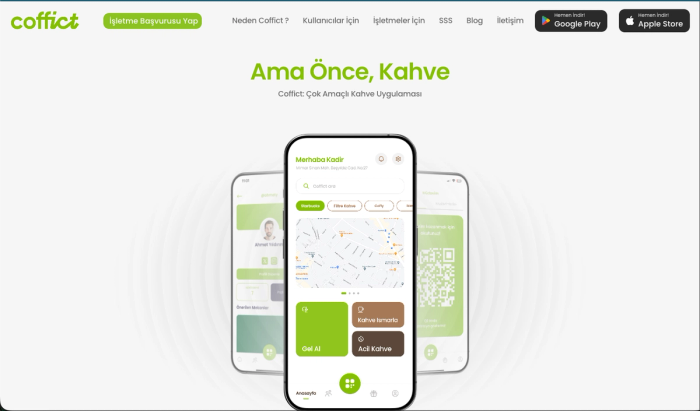
Coffict (https://coffict.com) is a coffee ordering and loyalty app. The mobile client is React Native and the dashboard cafes use is Next.js. The decisive call was where loyalty points get calculated. Leave earning and redemption logic on the device and it becomes something a motivated user can tamper with, so balances and rules live on the server while the app only renders the result. Order ahead, cafe discovery and reward history all sit on that same data model, which is why adding a new reward type did not mean rewriting three screens.

02

Real-time features and the backgrounded app

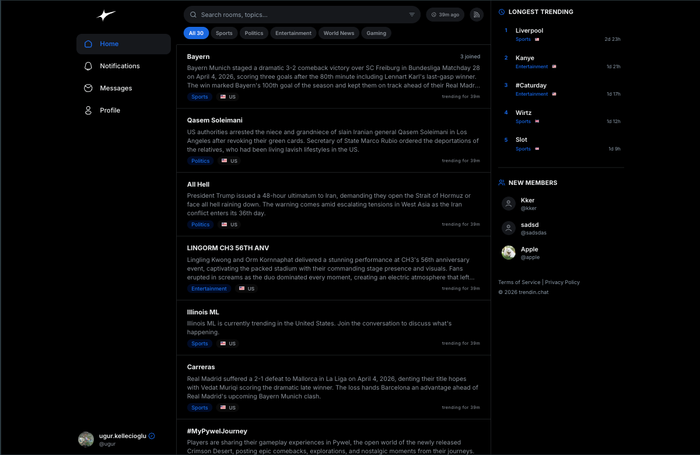
TrendinChat (https://trendin.chat) opens real-time chat rooms around trending topics and was built in two weeks with React Native, Supabase, WebSocket and Grok AI. The hard part of real-time on mobile is not the socket itself, it is what happens when someone switches apps or steps into an elevator. The connection drops, so you need reconnection, a way to backfill messages missed while away, and deduplication so a resent message does not appear twice. Skip that and the product feels solid on a desktop and unreliable in a pocket.

03

AI writes a lot of it, engineers own all of it

Our development is AI-assisted and engineer-led. Screen scaffolding, list rendering and repetitive glue code get generated quickly, while the data model, authentication, authorization, payment paths and the security review stay with senior engineers. On mobile that split lands in specific places: where session tokens sit on the device, meaning Keychain on iOS and Keystore on Android, how token refresh behaves, and whether in-app purchase receipts are verified on the server instead of trusted from the client. None of that is left to generated code.

04

Store submission, and the month after launch

Writing the app is one job. Getting it through App Store and Google Play review is a separate one, with privacy declarations, permission justifications, release notes and reviewer questions that arrive at inconvenient hours. After launch you watch crash reports and real usage, because the first cohort of users always finds behaviour nobody planned for. Teams that want continuous work use our retainer at $800 per month for 20 hours, covering fixes, store updates and OS compatibility. We would rather be a long-term partner than a single handover.

Proof

Products we shipped with exactly this.

Questions

The things people ask before starting.

What drives the cost of a mobile app?

Screen count, how much backend you need, payment and subscription flows, real-time features and third-party integrations. A first version starts from $5,000 and a full app from $10,000. Those are starting points rather than quotes, and the final scope is agreed in writing after discovery.

Do we need separate budgets for iOS and Android?

No. With React Native most business logic and interface code is shared across both platforms. Push notifications, store submission and platform-specific permissions do take extra effort, but that is a line item inside one project, not a second budget of the same size.

Who owns the source code?

You do. The repository, database and hosting accounts are opened in your name or connected to accounts you already hold. We document architecture decisions and setup steps, so continuing with your own developers or a different studio is never blocked by anything on our side.

Do you support the app after launch?

Yes. The retainer is $800 per month for 20 hours and covers bug fixes, store updates, OS version compatibility and small features. Anything larger is scoped and priced separately in writing. With 16 live products, post-launch work is our normal mode rather than an exception.

Contact

Looking for an engineering partner for the long haul?

A short note about the product, the timeline and who it is for is enough to start. You will hear back from the engineer who would do the work, not a sales team.

Ankara / Türkiye · Working across European and US time zones