SaaS product development

SaaS Development: Multi-Tenant Products

The hard part of SaaS is rarely the interface. It is keeping several companies' data in one system without any of it leaking sideways, having subscription state read correctly in every part of the product, and making permissions behave according to the plan a customer is actually on. Curiosive is a software studio run from Ankara, Türkiye, with more than five years of production work and 16 live products, many of them subscription based.

A full SaaS product starts from $10,000. If you want to reach the market with a narrower first release, MVP pricing starts from $5,000, and ongoing development after launch runs on the retainer at $800 per month for 20 hours. These are starting points, not fixed quotes. The exact scope is agreed in writing after a discovery call.

01

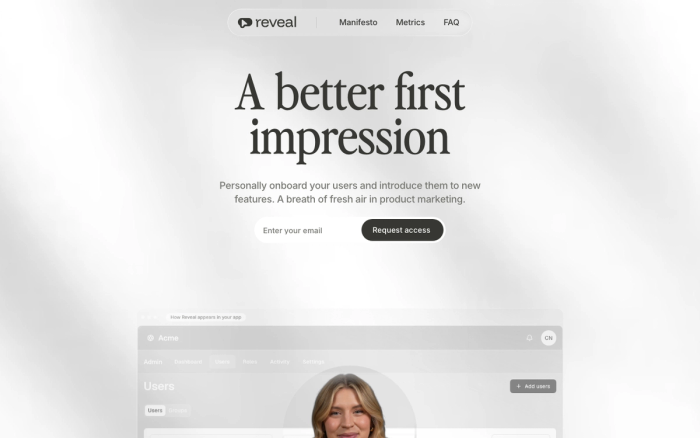
Tenant isolation belongs in the data model: Reveal Software

Reveal Software (https://reveal.software) adds personal video onboarding to SaaS products, replacing cold tooltips with a human walkthrough, and runs on Hono, Drizzle ORM and PostgreSQL alongside a browser extension. The critical decision in products like this is where tenant separation is enforced. If filtering exists only in application code, one missing condition in one query can expose another customer's data. So the tenant identifier is part of the data model and the access restriction is also defined at the database level, where a forgotten clause cannot bypass it.

02

One source of truth for subscription state

The most common defect in subscription products is billing state stored in two places. A customer cancels and the app keeps letting them in, or a payment fails and nobody notices for a month. We treat the payment provider's events as the source of truth and write handlers that are idempotent, so a redelivered webhook is not processed twice. Trials, upgrades, downgrades, failed payments and cancellations each get tested as their own scenario. Payment paths are one of the areas where senior engineer review is mandatory.

03

Separating content from entitlement

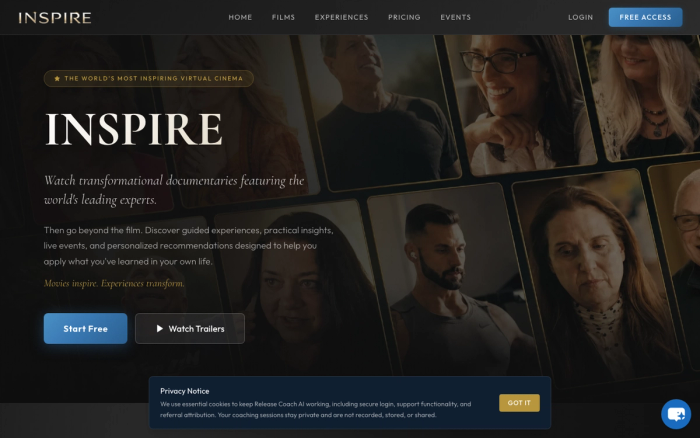
This is HCD (https://thisishcd.com) hosts 374 episodes, free courses and more than 462 designers from over 130 countries. The split that worked: content lives in Sanity as structured data while membership and user state live in Supabase, so an editor publishing an episode never touches the application database. Inspire Film (https://inspire.film) uses a comparable arrangement for video streaming and live events, where entitlement is checked per title rather than granted once at the account level.

04

AI-assisted development under engineer control

Most of the code is written with AI assistance, and SaaS is where that pays off visibly, because these products are full of screens, forms and list views that follow known patterns. The data model, authentication, authorization rules, payment paths and the security review stay with senior engineers. In SaaS the stakes on that boundary are higher than elsewhere: an authorization mistake does not affect one user, it affects your whole customer base at once. We work as a long-term partner rather than a single handover.

Questions

The things people ask before starting.

What does SaaS development cost?

A full product starts from $10,000 and a narrower first release from $5,000. User roles, the number of plans, integrations and reporting requirements are what move the figure. The exact scope and budget are agreed in writing after a discovery call.

Do you set up payments and billing?

Yes. Provider integration, plan and limit definitions, trials, upgrades and cancellation flows are part of the scope. Webhook handlers are written to be idempotent, so subscription state stays consistent everywhere and access is never calculated from a stale or duplicated event.

Can multi-tenancy be added later?

Technically yes, practically it is expensive. Tenant separation sits at the foundation of the data model, so retrofitting it means migrating data and reviewing nearly every query in the codebase. Planning for it at the start is significantly cheaper than adding it under pressure.

Can our own team take the product over?

Yes. The repository, database and hosting accounts stay in your name. During handover we document architecture decisions and how the system is operated. If you want us to stay available afterwards, the retainer at $800 per month for 20 hours covers that.

Contact

Looking for an engineering partner for the long haul?

A short note about the product, the timeline and who it is for is enough to start. You will hear back from the engineer who would do the work, not a sales team.

Ankara / Türkiye · Working across European and US time zones