Skip to content
Rochester, New York · Guided voice-session interfaces

Guided Voice Session Development for Rochester, New York Teams

A voice session needs to tell someone when it is speaking, listening or waiting for a response. An unclear transition can leave the participant repeating themselves or wondering whether anything was captured. We help Rochester, New York coaching-product teams develop explicit session controls around an approved spoken method.

Our Release Coach AI work, recorded in Spain, uses guided audio prompts and speech recognition within a sequence of session steps. It provides concrete engineering evidence for a separately scoped voice product. Curiosive uses AI to accelerate implementation under human review and stays involved as a long-term partner as scripts, supported devices and participant needs evolve.

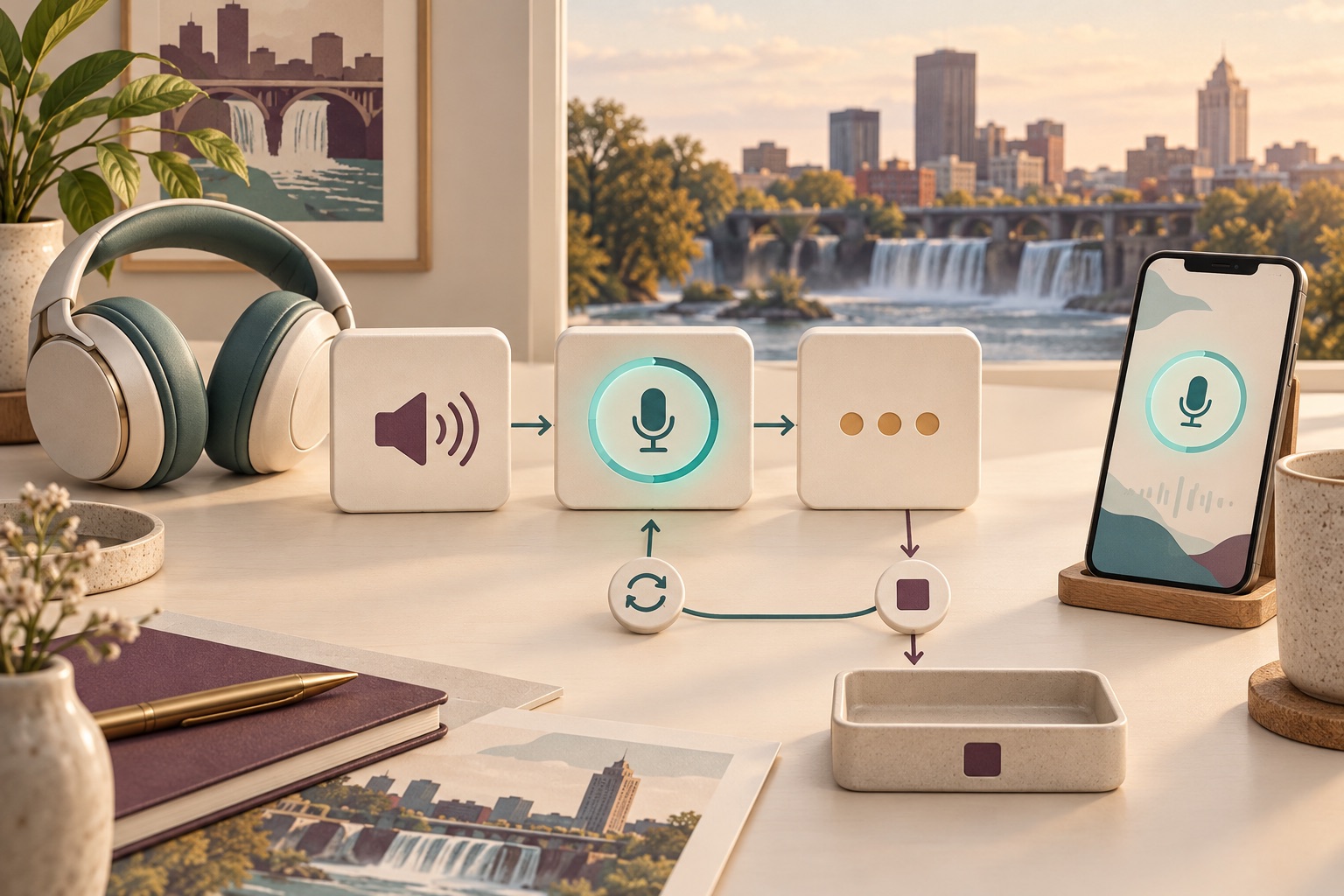
Concept of speaking, listening and waiting states connected to repeat and stop controls beside a phone microphone view
AI-generated concept artwork for guided voice-session controls; not a Release Coach AI screenshot or participant recording.
5+
years building for production
12
countries the work runs in
100%
of code read by a senior engineer
1 day
to hear back, from the engineer
Browse industry workflows →

Make the current session mode understandable

Begin with one approved prompt and the response it expects. Define the difference between playing audio, listening for input, interpreting a response and waiting for another participant action. Agree which controls are available in each mode and how the interface explains the transition. Review the sequence without relying on sound alone to describe its state. The content owner approves the method; engineering turns it into explicit application behavior that can be reviewed across supported devices.

Relevant work: Release Coach AI's step-based session engine

The published Release Coach AI case describes a React and TypeScript application on Supabase with authentication, PostgreSQL and edge functions. Guided audio prompts play for each step, and speech recognition listens for responses. The session model has modes for asking, speaking and waiting for a repeated phrase, with the next step depending on the answer. A member dashboard, progress tracking and administration surround the session. The project is recorded in Spain. This delivered structure provides a reference for Rochester software whose controls and recovery rules are separately agreed.

Give uncertain input a deliberate retry path

Decide how silence, an unsupported response and an interrupted recognition request differ. Agree what repeats: the prompt, the listening stage or another defined part of the flow. A repeat should not unexpectedly advance the sequence or create another active capture. Review repeated taps and a participant who speaks before the prompt finishes. Use the approved script and branch examples to evaluate session behavior separately from any claims about the method's effects on a participant.

Define microphone access and session ending together

Agree the supported browsers or devices and what appears when microphone permission is unavailable. Decide which activity stops when the participant ends a session and which minimal record, if any, the product retains under its approved policy. Keep session state connected to the intended account. AI accelerates familiar components and implementation exploration; engineers review capture lifecycle, branch transitions and recovery. The responsible product owners approve the script, consent language and information-handling policy.

Review the transition from spoken prompt to recognized response

For a new engagement, bring an approved session script, branch rules and supported device examples. Proposed acceptance examples: the interface identifies the current speaking or listening state; a recognized response follows the approved branch; silence exposes the agreed retry action; and ending the session stops the intended capture and playback activity. Include denied microphone access and a repeated control action. These are proposed software checks, not claims about Release Coach AI's historical device tests, clinical efficacy or coaching outcomes.

A product partner as the guided method changes

Participant questions and supported-device differences reveal where timing, control labels or retry behavior needs improvement. We collaborate on a shared backlog and reviewed releases so those findings shape the product. Monthly AI-accelerated development starts from $2,000, with capacity, content ownership and operating responsibilities agreed in writing. Curiosive LLC works remotely with Rochester, New York teams through agreed Eastern-time review windows, with engineering led from Ankara. The relationship continues beyond the first completed voice-session demonstration.

Questions

The things people ask before starting.

Can you build guided voice-session software for a Rochester, New York team?

Yes. Bring the approved script, branch rules and supported devices. We can scope prompt playback, response handling and session controls together.

What does Release Coach AI demonstrate?

Its Spain-recorded case covers guided audio prompts, speech recognition and an explicit step-based session engine within a member platform.

Can participants retry when a response is not understood?

That can be an agreed requirement. Define which session stage repeats and review silence, uncertain input and interrupted capture as separate examples.

Can you keep developing the voice product after launch?

Yes. A continuing engagement can prioritize participant feedback, approved script changes and supported-device improvements through a shared backlog and reviewed releases.

How it starts

What happens after you write to us.

  1. 01

    You describe the product

    One paragraph on what you are building, roughly when you need it, and who it is for. No brief, no form with fifteen fields.

  2. 02

    You get a reply within a day

    From the engineer who would do the work, not a sales team. If we are not the right fit we say so, and where possible we point you somewhere better.

  3. 03

    You get a scoped plan

    Scope, price and timeline in writing before anything is committed. You decide with the numbers in front of you.

No long contract to begin, no lock-in to our tooling, and the code is yours from the first commit.

Start a conversation
Contact

Looking for an engineering partner for the long haul?

A short note about the product, the timeline and who it is for is enough to start. You will hear back from the engineer who would do the work, not a sales team.

Ankara / Türkiye · Working across European and US time zones