Skip to content
Cleveland, Ohio · Multilingual clinical-document review tools

Clinical Report Review Software Development for Cleveland Teams

A translated document and a structured summary serve different reading tasks. A professional reviewing either needs to know which source it describes and whether processing is complete. We help Cleveland healthcare product teams develop that source-to-output review journey around the document examples, language support and operating policy in their own scope.

Our MedGuide work, recorded in the United Arab Emirates, includes a document viewer, translations, structured report dashboards and PDF export, supported by a queued processing pipeline. It provides concrete engineering evidence for a separately scoped product. Curiosive uses AI to accelerate implementation under human review and stays involved as a long-term partner as source formats and reviewer needs evolve.

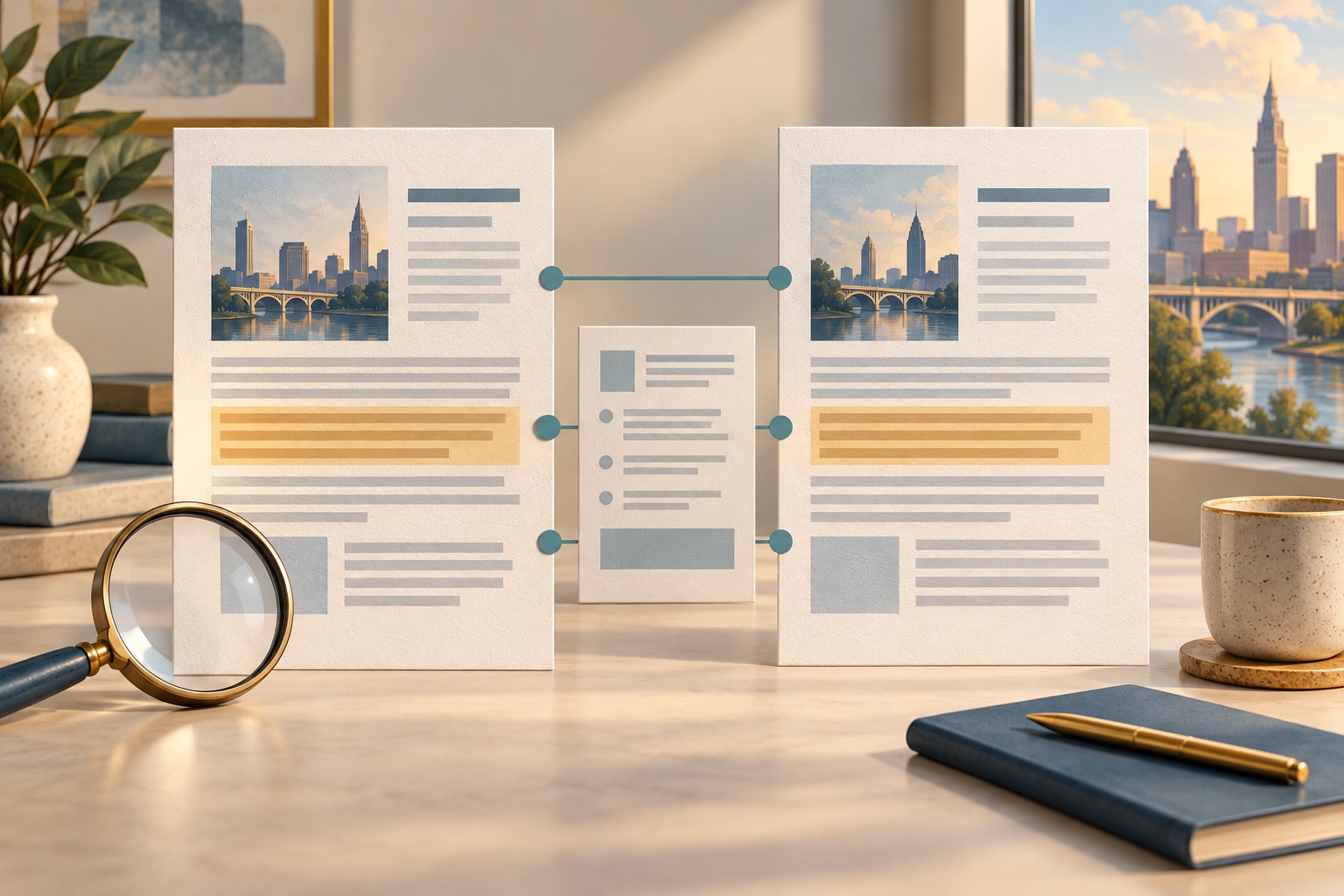
Concept of corresponding source and translated document sections beside a structured report and review marker
AI-generated concept artwork with fictional documents; not a MedGuide screenshot, patient record or approved clinical report.
5+
years building for production
12
countries the work runs in
100%
of code read by a senior engineer
1 day
to hear back, from the engineer
Browse industry workflows →

Give each output an identifiable source

Begin with an approved sample and identify the source document, its pages, the translation and the structured report as distinct records. Agree how the reviewer moves between them and recognizes which processing version produced the output. Keep a replaced source separate from an earlier completed result. Define how missing pages or an unreadable source appear in the review interface. The first journey should make those relationships understandable before adding more output formats or comparison controls.

Relevant work: MedGuide's document and translation workflow

The published MedGuide case describes a Next.js and TypeScript application with Supabase, upload, a document viewer, structured report dashboards, translations, follow-up chat and PDF export. A NestJS backend runs extraction, validation, translation with layout preservation and report building as queued jobs. Gemini on Google Cloud performs extraction. The project is recorded in the United Arab Emirates. This delivered application and pipeline scope provides evidence for a Cleveland tool; its source comparison, version handling and professional approval controls are separately agreed requirements.

Separate translation review from report review

Agree which languages and document examples the initial release supports. Define what a reviewer checks in translated text and what they evaluate in a structured report. Layout preservation can help navigation, but content quality still needs evaluation by the responsible professionals using the approved examples. Decide how an incomplete translation or unsupported language is explained. Keep reviewer decisions and processing status clear so a completed software job is not mistaken for professional approval of its content.

Make export follow the agreed output and handling policy

Decide which source and output versions an export represents, who may request it and what is available before review finishes. Agree access, provider inputs, processing location and retention with the responsible owners. Use appropriately authorized or synthetic material for application review. AI accelerates familiar interface work and implementation exploration; engineers review record relationships, access and export behavior. The product's clinical and language reviewers own content evaluation and the approval process defined for the engagement.

Review translated output alongside the intended source

For a new engagement, bring appropriately authorized or synthetic source documents, supported languages and the professional review process. Proposed acceptance examples: the viewer opens the intended source and translated output; a revised source follows the agreed version rule; an incomplete translation is distinguishable from a completed report; and export uses the output selected under the approved review policy. Include a missing page and an unsupported language. These are proposed application checks, not claims about MedGuide's historical translation tests, clinical accuracy or regulatory status.

A product partner as reviewer needs develop

New source formats and reviewer feedback reveal where comparison, status explanations or export context needs improvement. We collaborate on a shared backlog and reviewed releases so those findings shape the application. Monthly AI-accelerated development starts from $2,000, with capacity, validation owners and operating responsibilities agreed in writing. Curiosive LLC works remotely with Cleveland teams through agreed Eastern-time review windows, with engineering led from Ankara. The partnership continues beyond processing the first sample document.

Questions

The things people ask before starting.

Can you build clinical-report review tools for a Cleveland team?

Yes. Bring the supported document examples, intended outputs and responsible reviewers. We can scope source navigation, processing states and export behavior together.

What does MedGuide demonstrate?

Its UAE-recorded case covers a document viewer, translations, structured report dashboards and export alongside a queued extraction, validation, translation and report-building pipeline.

Can reviewers compare a translation with its source?

That can be an agreed requirement. Define the source and output records, supported languages and navigation needed by the professional review process before implementation.

Can you keep improving an existing review application?

Yes. A continuing engagement can prioritize reviewer feedback, supported formats and agreed workflow changes through a shared backlog and reviewed releases.

How it starts

What happens after you write to us.

  1. 01

    You describe the product

    One paragraph on what you are building, roughly when you need it, and who it is for. No brief, no form with fifteen fields.

  2. 02

    You get a reply within a day

    From the engineer who would do the work, not a sales team. If we are not the right fit we say so, and where possible we point you somewhere better.

  3. 03

    You get a scoped plan

    Scope, price and timeline in writing before anything is committed. You decide with the numbers in front of you.

No long contract to begin, no lock-in to our tooling, and the code is yours from the first commit.

Start a conversation
Contact

Looking for an engineering partner for the long haul?

A short note about the product, the timeline and who it is for is enough to start. You will hear back from the engineer who would do the work, not a sales team.

Ankara / Türkiye · Working across European and US time zones