AI-assisted pricing integration: how Curiosive connected offers across its own website
- Agency workflow
- AI development
- Pricing integration

A pricing change on an agency website is a small integration project. The visible cards are only one surface. The same offer can appear in another language, structured data, a public API, a Markdown representation, service terms and machine-readable discovery files. If those surfaces disagree, visitors and tools can receive different answers about what the agency actually offers.
In October 2026, Curiosive used AI-assisted implementation to publish approved service offers on our own website. This article describes that internal website work and its inspectable result. It is not a client case study, a measured speedup or evidence of completed customer payments.
The approved offers defined the implementation
The commercial decisions came first. Our public pricing and service terms describe an AI Launch Audit at USD 500 once, separate from implementation, and an AI Engineering Partner at USD 1,500 per month for up to 20 hours. The partner offer has one prioritized queue, monthly usage reporting, no hour rollover and approval for extra work.
Landing pages, MVPs and full applications remain quote-only builds with starting prices. They are not interchangeable with fixed offers. The public workflow requires written confirmation of scope, capacity and a start date before checkout. Payment does not expand the agreed scope or establish immediate availability.
Those constraints gave the implementation specific facts to preserve. AI-assisted work could help carry approved information through the codebase; it did not authorize new prices, additional capacity or different commercial terms. The resulting change was a representation and enquiry workflow, with the agreement boundary visible to visitors.
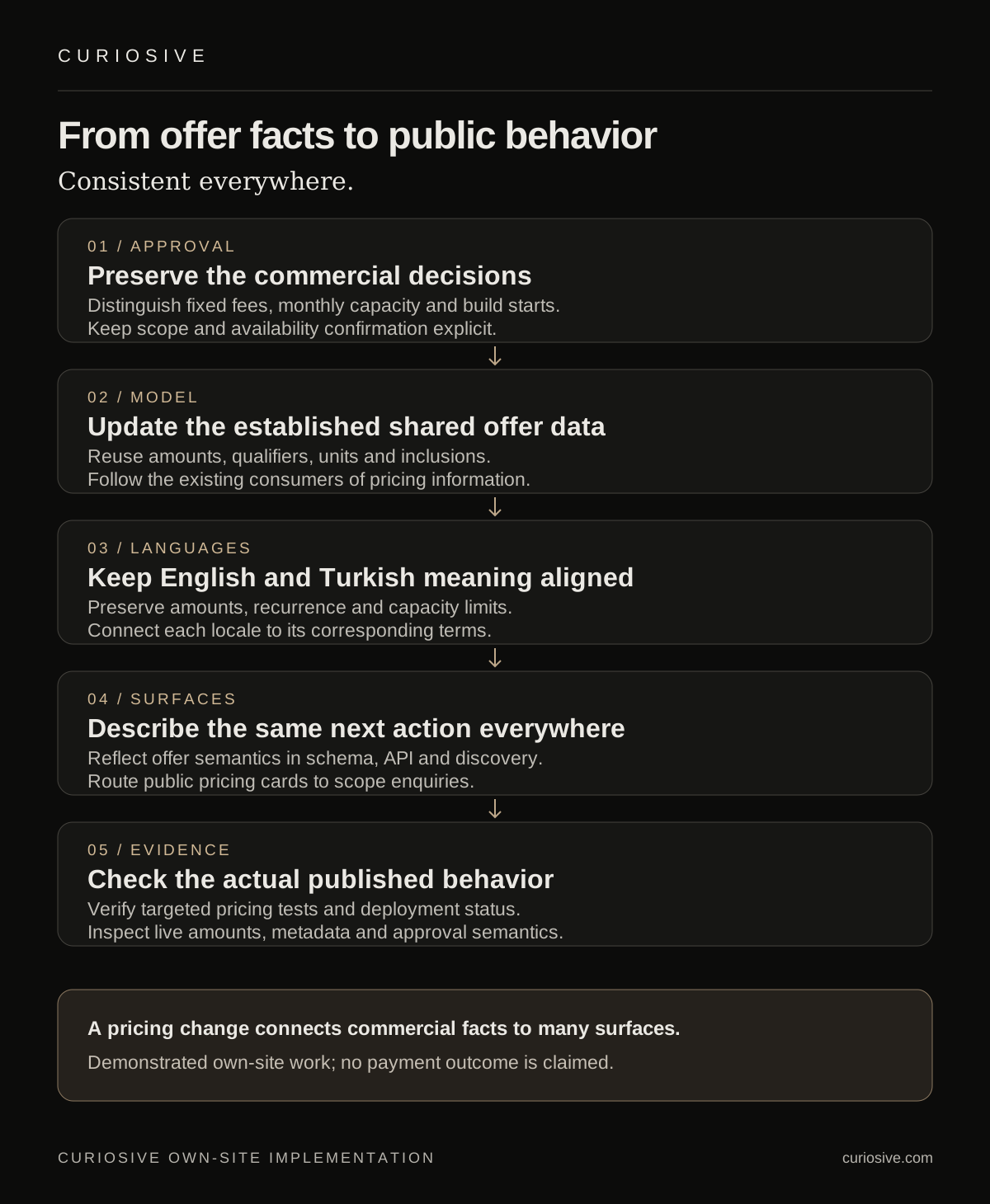
Shared offer data connected the public surfaces
The website already had a pricing array used by several parts of the application. The update added the audit and revised the monthly partner offer there, including amount, price qualifier, unit and inclusions. The qualifier distinguishes a fixed price from a build starting price.
The pricing interface uses that shared amount and qualifier while selecting the visible copy for the requested language. The home-page structured data also derives priced offers from the same array. The public API serializes it into a documented shape, and the Markdown representation uses it when describing the site.
This is a concrete example of AI-assisted work inside an existing architecture. A new standalone pricing widget would have left other consumers to drift. Updating the existing representation connected the visible change to the places that already relied on it.
Shared data does not remove every consistency task. Language-specific descriptions and the service terms still need review. The useful boundary is clear: common amounts and offer semantics come from the shared model; localized copy must preserve their meaning.
English and Turkish preserved the same offer boundary
The implementation included English and Turkish pricing copy and service-terms pages. Both visible pricing sections distinguish fixed fees from starting prices and direct the visitor to confirm scope and availability.
The published partner description preserves the monthly capacity limit rather than presenting an unlimited delivery promise. The audit copy keeps implementation separate from the review. The terms explain the continuing responsibilities and direct scope or billing questions to the existing contact destination.
The inspected live home pages contain matching priced offers in USD. Their structured data represents the partner’s billing period as one month, with the up-to-20-hours unit. This verification establishes consistency for those fields; it does not claim that every machine-readable field is a full translation of the visible Turkish copy.
For multilingual agency delivery, that distinction matters. Review commercial meaning as well as wording: amount, recurrence, scope limits and the action the visitor can take. AI-assisted translation and editing are candidates to inspect against those approved facts.
The public action is an enquiry before checkout
Each pricing card routes to the established contact email with an offer-specific enquiry subject. The visible call to action asks the visitor to confirm scope and availability. Both languages link to their corresponding service-terms page.
This decision keeps the next action aligned with the service being sold. Engineering capacity requires an agreed queue and start date. A quote-only build requires a defined scope. The public page therefore invites a conversation that can establish those conditions before checkout is provided.
The API makes that boundary explicit too. In the public site endpoint, each pricing entry includes a fixed-or-starting classification and a checkout-approval flag. Its existing from field still carries the advertised price, with the classification explaining how to interpret it. The OpenAPI document describes that distinction.
An API flag communicates policy; it is not an authentication control or an automatic capacity reservation. The demonstrated website behavior is the enquiry path and public description of the approval requirement. We do not present it as a server-enforced booking system.
Keep billing configuration distinct from website claims
Stripe’s product and price documentation distinguishes the offered service from the amount and frequency charged for it. That model is relevant to separating a one-time audit from a monthly partner offer. A displayed starting price for a scoped build does not, by itself, define the final amount to collect.
The website release described here did not add an automatic fulfillment system. It should not be interpreted as evidence that a paid checkout, renewal, failed payment or cancellation was tested. Those flows require their own implementation and verification.
For any automated post-payment work, Stripe’s fulfillment guidance uses payment events rather than relying only on a return page. That is a separate integration responsibility, particularly for recurring billing and asynchronous payments. The current article records the offer and enquiry boundary actually published on our website.
Tests checked the commercial behavior
The pricing regression tests render the English and Turkish pricing sections and inspect their links. They check that all five cards produce email enquiries, that the approved audit and partner amounts appear and that each locale links to its own terms page. They also guard against introducing public direct-checkout links.
The API test checks which offers are fixed and which are starting prices, and verifies the approval flag for every offer. The sitemap tests cover the terms pages and their language relationship. These are targeted assertions about the change’s actual failure modes, rather than a claim that all billing behavior is covered.
The original pricing release deployed successfully. The current public pages, schema and API were inspected again for this article. The evidence connects approved offer facts to rendered behavior and machine-readable representations; it does not establish conversion uplift, reduced delivery time or customer outcomes.
What this own-site example demonstrates
AI-assisted agency work can involve a modest feature with several consequential dependencies. Here the work connected approved offers, bilingual presentation, schema, API semantics, terms and enquiry navigation within the existing application.
The practical lesson is to identify those consumers before implementing the visible change. Give the implementation the approved facts and current architecture, then review the representations that visitors and tools actually receive. Where billing automation is outside the completed scope, keep that limit explicit.
Have an offer or integration that needs to stay consistent across your website? Contact Curiosive with the current public flow and intended next action. Our AI integration services, pricing and service terms provide the starting point for a scoped discussion.
Frequently asked questions
Is this a Curiosive client pricing case study?
No. It describes AI-assisted implementation on Curiosive’s own website and its inspectable public result.
What did the website pricing update verify?
It verified approved amounts, fixed-versus-starting classification, enquiry navigation, locale-specific terms links and API approval semantics, with targeted tests and public release checks.
Does the API approval flag enforce a booking or prove payment testing?
No. It communicates the public approval policy. The article does not claim an enforced reservation system or tested checkout, renewal and cancellation flows.
Put this into practice
Explore the services related to this article.
A short note about the product, the timeline and who it is for is enough to start. You will hear back from the engineer who would do the work, not a sales team.
Start a partnership