AI monitoring tools: better leads start with visible evidence
- AI integration
- Product engineering
- Monitoring

An AI monitoring tool is useful when it helps someone notice a relevant change and inspect the evidence. A larger digest is not necessarily a better product. Without a clear brief, source tracking and a way to distinguish new information from repeated information, automated monitoring can move the manual work into a different inbox.
The Philadelphia Inquirer’s Scrape project offers a useful starting point. Its reported development focused on a real editorial workflow and feedback from the people using it. For teams building internal research tools, customer intelligence or document monitoring, the engineering question is how to make every surfaced lead traceable, reviewable and worth the interruption.
What the Inquirer’s Scrape story reports
The Lenfest Institute’s 30 September 2026 account describes an AI tool that helps the Inquirer find leads for local newsletters. The team began with an editor’s curated sources and manual tip sheets, compared generated results with that work and refined the tool through repeated feedback. The account emphasizes newsletter-specific audience and coverage descriptions rather than a single generic definition of newsworthiness.
The Hacker News submission drew limited discussion when we read it. It points to the case study; it does not supply an independent effectiveness measurement. We have not tested Scrape or its implementation, and the article is not a benchmark for other organizations.
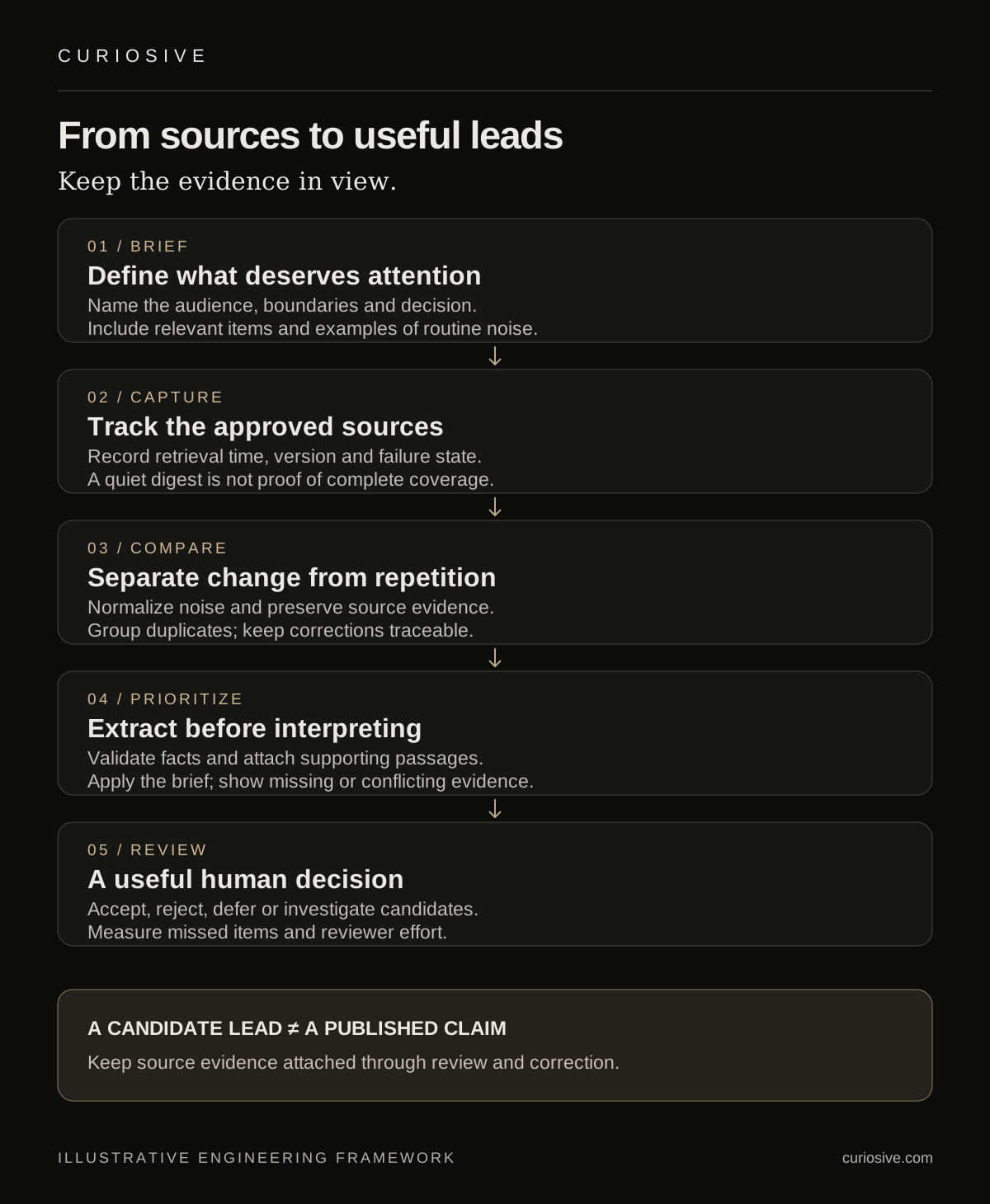
Our recommendation is to carry the workflow lesson into the product design: decide who will act on a lead, define what matters to them and preserve the evidence they need. The pipeline below is an illustrative architecture for monitoring tools, not a description of Scrape’s internal code.
Define the brief before collecting more sources
A monitoring brief should name the audience, the subject, the boundaries and the decisions the output may support. “Tell us important news” leaves too much undefined. “Surface changes to these approved source pages that affect these named workflows” gives both the system and its reviewer a more useful target.
Include examples of relevant items and examples that should be ignored. A team tracking product documentation may care about changed behavior and deprecations but not repeated promotional announcements. A community editor may care about a specific service disruption but not every routine calendar update. The brief should make those distinctions explicit.
Define the unit of output as well. Is it a document, an event, a changed paragraph or a proposed lead that combines several sources? This choice affects deduplication, evidence links and the amount of review work. An output format should follow the decision the reader needs to make.
Keep the brief versioned. When its audience or scope changes, evaluate old and new behavior on known examples. A tool that suddenly changes what it calls important can create confusion even if every sentence it generates is plausible.
Give every source a visible state
Maintain an approved source registry with an owner, retrieval method, expected update pattern and scope. Use feeds or documented interfaces where they suit the source, and follow the source’s access requirements. Add new sources deliberately rather than letting an unrestricted search quietly redefine the coverage.
For each retrieval, record when it happened and whether it succeeded. An empty result can mean no new material, a changed page structure, a blocked request or a failed extraction. Those states should be distinguishable in the operator view. Otherwise, a quiet digest can be mistaken for evidence that nothing happened.
Preserve the relevant source content or an appropriate version reference when retention and access rules allow it. Store the original URL, retrieval time and the evidence used for the candidate lead. This gives a reviewer a way to inspect what the system saw, including when the live page has changed since collection.
Avoid overcollecting. An internal tool should not need to retain every page or personal detail indefinitely just because storage is available. Decide what supports review and debugging, who can read it and when it should expire.
Detect change before deciding importance
Separate the question “what changed?” from “does this matter to this audience?” A source may be updated frequently without containing a meaningful new event. Conversely, a small change to an important field can deserve attention.
Use stable source identifiers where available and normalize content enough to ignore recurring navigation, timestamps or formatting noise. Keep the original evidence alongside the normalized representation. Normalization should help identify repeated material, not silently remove the very field that matters to the brief.
Represent revisions explicitly. A corrected event date should update an existing candidate where appropriate rather than produce another unrelated alert. If several pages describe the same event, group them while retaining their individual evidence. Do not assume that similar wording proves two records refer to the same thing.
For an illustrative documentation monitor, a repeated page footer should not become a new lead. A changed API parameter on a watched reference page may be a candidate even when the page title is unchanged. The difference requires a content model and a brief, not only a summary prompt.
Keep extraction separate from interpretation
Extract the facts the workflow needs into a small schema: subject, observed change, applicable date if present, source reference and supporting passage. Validate that required fields are present and distinguish an absent value from one the system inferred.
Then apply the relevance brief. A model may help categorize a candidate or explain why it seems relevant, but its explanation should remain connected to the extracted evidence. A confident summary should not be able to add an unsupported deadline or invent an affected product.
Label uncertainty usefully. “Date not stated in the source” gives a reviewer something concrete to resolve. A bare confidence score may look precise while hiding a missing field. For a lead built from several sources, show which source supports each important claim and where the accounts conflict.
Treat retrieved material as data. It should not be able to change the monitor’s source policy, delivery recipients or tool permissions. Keep those settings in application configuration and enforce them independently of the text being analyzed.
Design the reviewer’s inbox
A candidate lead should show what changed, why it matches the brief, where the evidence is and what the reviewer can do next. Let people accept, reject, defer or mark a duplicate. Keep correction separate from approval so an edited lead is not automatically treated as ready for use.
Use batching and prioritization according to the workflow. A daily research digest can group related items; an urgent operational alert needs a much narrower trigger and a clear owner. Sending every generated candidate immediately can make the system harder to trust even if some items are valuable.
Keep the content and the underlying claim distinct. A lead is a prompt for investigation. It does not automatically become a published story, a customer message or an operational change. If the product includes those later actions, give them separate approval rules and show the proposed action before it happens.
Review feedback should update the system deliberately. Record the rejection reason where useful: irrelevant geography, repeated information, unsupported claim or a source outside scope. Those categories provide more actionable evidence than a generic thumbs-down button.
Measure usefulness and missed coverage
Create an evaluation set from the current workflow with permission to use the material. Include useful leads, routine noise, repeated items, corrections and sources that fail to load. Keep some examples out of prompt tuning so the team can evaluate changes on material it has not optimized against.
Measure the share of candidates reviewers accept and the time they spend resolving them. Also sample for relevant items the tool missed. A system can achieve a tidy inbox by excluding too much; acceptance rate alone will not reveal that failure.
Track source coverage separately from model output quality. A source retrieval failure is different from a missed fact in a retrieved document. Report which sources were checked successfully so the reviewer can understand the limits of a digest.
Evaluate changes to the brief, retrieval method, normalization and model configuration against the same known cases. A higher volume of output should not count as progress unless it improves the reader’s actual work. Make any time-saving or coverage claim from measured use, with the conditions and limitations recorded.
Make failures inspectable
The pipeline needs bounded work and visible recovery. Set retrieval deadlines, request limits and a retry policy appropriate to each source. A failed source should have a status and an owner; repeated failures should not quietly disappear from a successful-looking digest.
Make repeated processing safe. A retry should not create a second copy of a candidate or send the same alert again. Use durable identifiers for source versions, candidate leads and deliveries. Record delivery state separately from generation so an uncertain send can be reconciled.
If a source changes its structure, keep the failure localized and recheck the affected extraction. Preserve previously approved evidence according to the retention plan, and show the affected coverage until the source is working again. The system should help operators identify the gap rather than manufacture a reassuring summary.
For a first release, keep the number of sources and output categories manageable. Expand when the review workflow and source monitoring are understood. A small tool that reliably supports a real task is easier to improve than a broad crawler with an unexplained relevance score.
What to put in a monitoring-tool brief
- The person or team reviewing the output, and the decision a useful lead supports.
- Approved sources, access requirements and the expected update pattern.
- Examples of useful changes, routine noise and items outside scope.
- The evidence a reviewer needs before accepting a candidate.
- Delivery cadence, urgent triggers, retention and ownership of failures.
Start with a pilot that runs alongside the existing manual process. Compare leads, inspect missed items and refine the brief with the actual reviewer. Use the pilot to decide which work can be automated and which judgment should stay explicit.
Build a monitor people can use
Planning an internal research or monitoring tool? Explore Curiosive’s AI integration services and our approach to scoping product work, or tell us about the sources and decisions you need to support.
Bring a sample of the current manual output, a few relevant and irrelevant items, and the people who will review the results. That makes it possible to discuss an actual workflow and the evidence it needs, rather than starting with an unrestricted search prompt.
Sources and scope
Read on 2 October 2026: the Lenfest Institute’s account of Scrape and the HN submission. The source experience is attributed in the opening section. The pipeline, examples and evaluation recommendations are Curiosive’s original analysis; they are not claims about Scrape’s implementation or measured performance.
Frequently asked questions
What makes an AI monitoring tool useful?
A clear audience and relevance brief, reliable source tracking, traceable evidence and a review workflow. Output volume alone does not show usefulness.
How do you evaluate AI-generated leads?
Compare with representative manual work, measure reviewer acceptance and effort, sample for relevant items missed, and track retrieval coverage separately from extraction and relevance errors.
Put this into practice
Explore the services related to this article.
A short note about the product, the timeline and who it is for is enough to start. You will hear back from the engineer who would do the work, not a sales team.
Start a partnership