Five Working Habits That Make AI Coding Agents Pay Off
- AI Coding Agents
- Software Delivery
- Engineering Practices
- Web Development
Many teams adopt an AI coding assistant, feel a modest lift, and conclude that the hype was overstated. The tool is rarely the problem. When two teams use the same agent on similar codebases, the one that rebuilt its working habits tends to pull far ahead of the one that simply added the tool to an unchanged process. For founders and product teams choosing how to build, this matters more than which assistant is in fashion.
Invest in agent context and the codebase itself
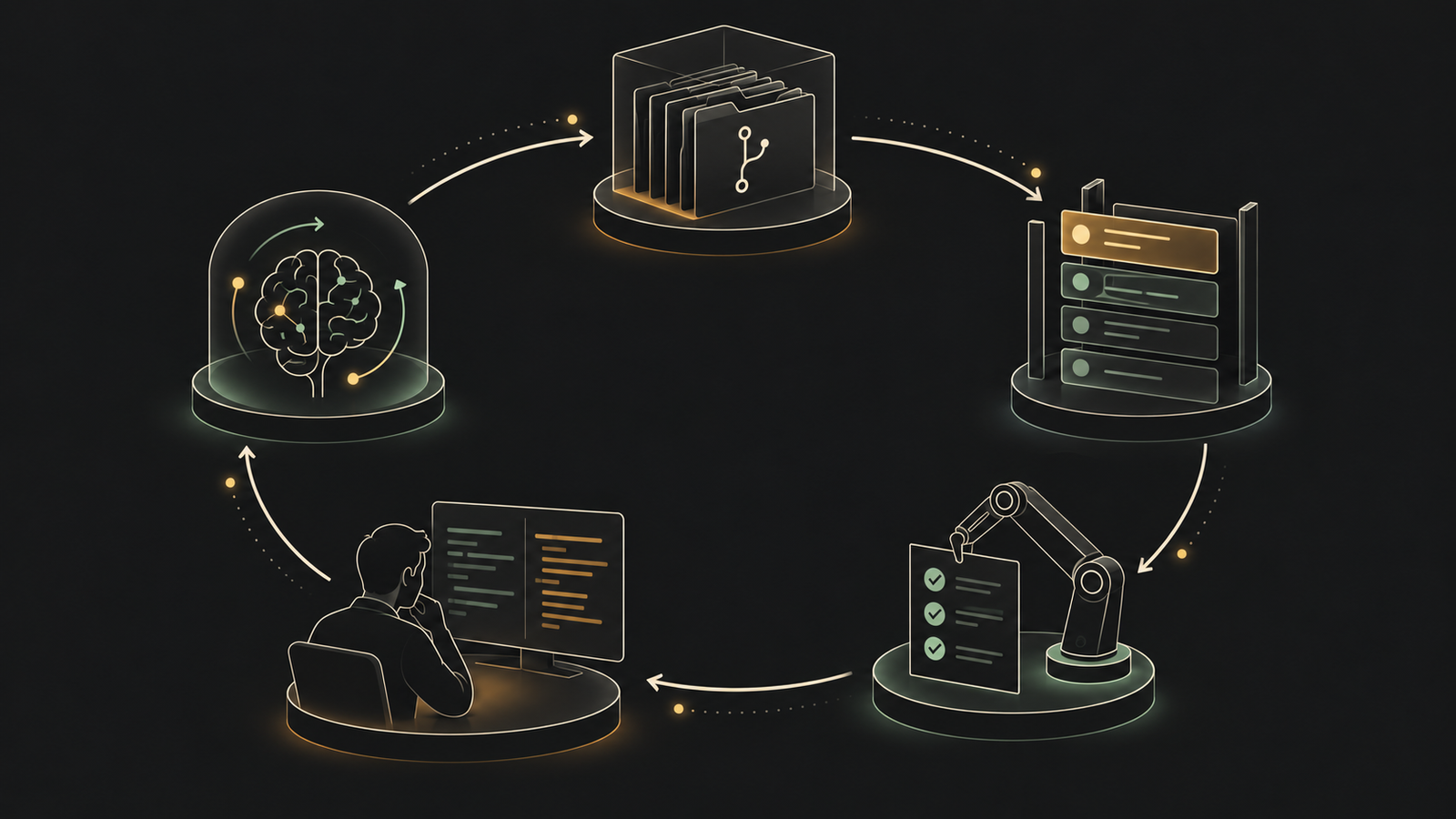
An agent only knows what is written down. Everything a senior engineer carries in their head, from naming conventions to architectural boundaries, has to reach the agent through steering files, skills and clear documentation. A useful habit: whenever the agent does something differently from how you would have done it, ask what was missing from its context, then add it.
The reverse discipline matters too. Models improve quickly, and instructions written for an older generation can bloat the context window. Review those files regularly and remove rules the current model no longer needs.
The codebase deserves the same attention. Clearer error messages, well-scoped tools and a structure that is easy to navigate all help an agent recover from mistakes. Typed languages such as TypeScript give an agent compiler feedback that untyped code cannot, which is one reason strongly typed stacks suit agent-heavy work.
Feed agents work instead of babysitting them
A constant back-and-forth conversation keeps the engineer in the loop for every step, which caps what one person can supervise. The better pattern is to hand over a well-defined task together with the means to check its own work: a build that compiles, tests that pass, linters that stay quiet. The agent then returns only when it meets a quality bar.
This is also where intent becomes critical. Iterating on a vague prompt produces a pile of code that misses the point. Agreeing a short written specification first is cheaper, because discussing a document is easier than untangling changes spread across a repository. Ambiguous or complex features benefit most from this step.
Shift testing left so the feedback loop is fast
Agents make mistakes, and that is acceptable when the signals are quick and trustworthy. Unit tests, integration tests, linters and security checks all serve as the agent's eyes. Local mock services with deterministic responses are especially valuable, since they let an agent run complete loops on a laptop without waiting for cloud dependencies. More loops mean more self-correction before a human ever looks at the result.
None of this is new engineering practice. What has changed is the return on investing in it.
Expect a slow start and new bottlenecks
Building context, tooling and tests is real work, and delivery can slow down before it speeds up. Leaders who expect immediate acceleration from the tool alone usually cause teams to skip exactly the groundwork that produces the gains. Rolling out to everyone at once has the same weakness: each team needs time to discover the context and conventions that suit its own product.
Once code is cheap to produce, other constraints surface. Reviewing output can be heavier than writing it, particularly for less experienced engineers, and running several agents in parallel raises cognitive load. Decision-making and approval processes often become the longest part of the schedule, so favouring fast, reversible decisions helps.
What this means for web projects
For a web product, the practical conclusion is to treat AI adoption as an engineering change programme. Write down conventions, keep types strict, build a fast test suite, specify intent before generating code, and keep senior engineers responsible for review. The agent then amplifies a sound process instead of amplifying its gaps.
Frequently asked questions
Why do some teams see little gain from AI coding agents?
They add the tool without changing how they work. Teams that invest in agent context, specifications and fast test feedback see much larger gains than those that layer the tool onto an existing process.
What is agent context and why does it matter?
Agent context is the written knowledge an agent needs, such as steering files, conventions and documentation. It matters because an agent cannot use what is only in an engineer's head, so gaps in context become repeated mistakes.
Does a typed language help AI coding agents?
Yes, typed languages such as TypeScript give agents compiler feedback that untyped code lacks. That feedback lets an agent catch and correct errors instead of guessing.
How can an AI agent work for hours without supervision?
It needs a way to verify its own work, such as tests, linters and a successful build. With those signals it can self-correct and return to a human only when it meets the quality bar.
Why does AI-assisted development slow down at first?
Teams must first build context, improve tooling and add tests, which takes real engineering time. Delivery speed usually improves after that groundwork is in place.
Put this into practice
Explore the services related to this article.
A short note about the product, the timeline and who it is for is enough to start. You will hear back from the engineer who would do the work, not a sales team.
Start a partnership