The Operating Model Behind Reliable AI-Assisted Coding
- AI Coding Agents
- Context Management
- Code Review
- Software Verification
Teams that adopt AI coding agents expecting a straightforward speed gain often get inconsistent results instead: one task finishes cleanly, the next produces a plausible looking diff that quietly breaks something. The difference rarely comes down to the model. It comes down to how work around the model is structured: how sessions are scoped, how output gets checked before anyone calls it done, and how parallel work gets filtered before a human looks at it.
Context And Session Discipline Shape Output Quality
A coding agent's context window behaves like short term memory: every file it reads competes for the same limited space, and output quality measurably drops once that space fills, no matter how large the window is on paper. Carrying an old task's context into a new one is a common way this happens by accident, so scoping one session to one task keeps output closer to what the agent can actually do. The prompt itself is the other lever: a vague instruction pushes an agent to read more of the codebase than it needs, spending context, and on metered plans, money, that a specific instruction would not. Treated together, these are ordinary resource management, the same discipline a team would apply to any expensive, rate limited resource.
Verification Has To Happen Before Work Is Called Finished
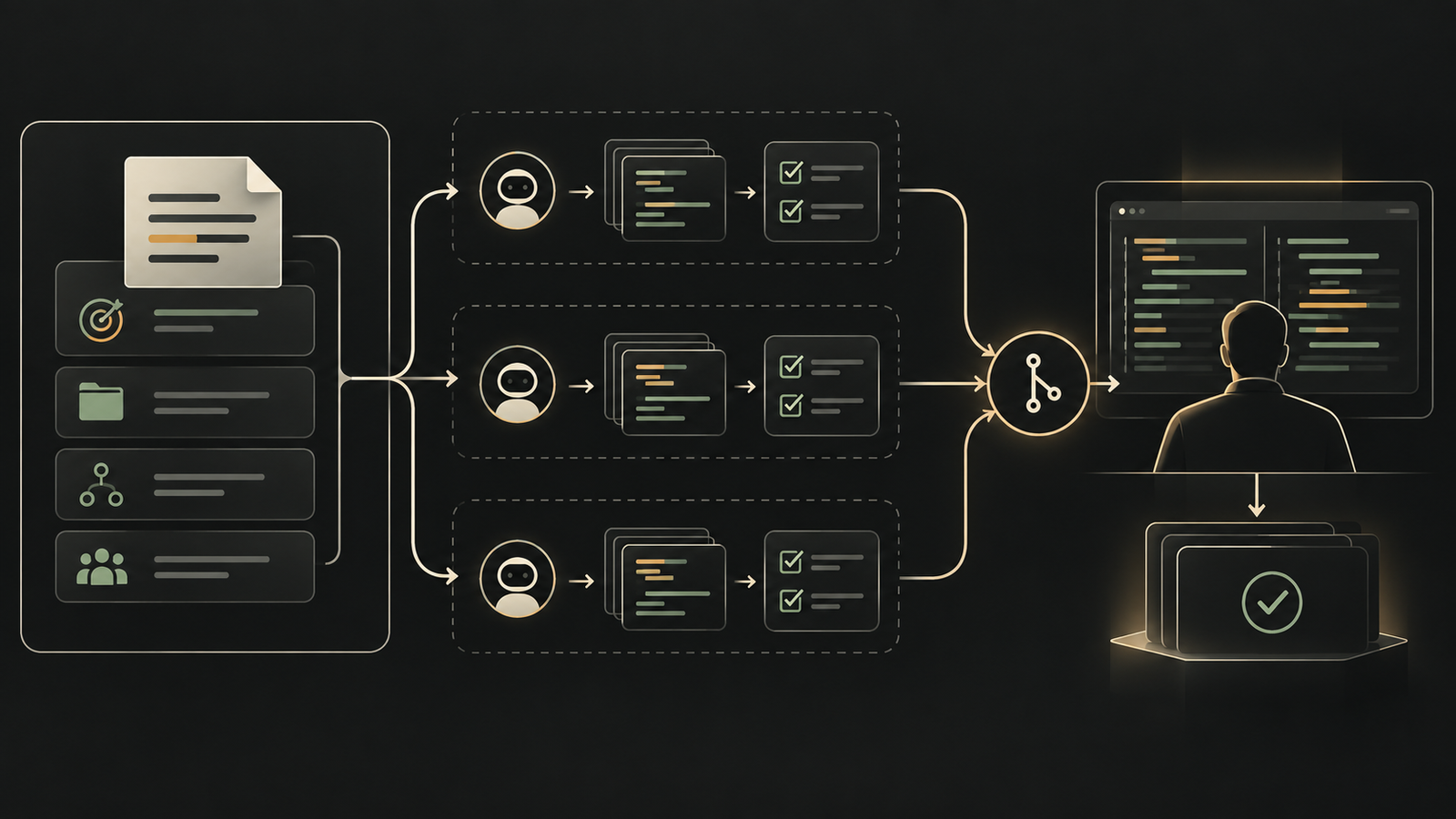
An agent has no independent way to know its own output is correct: it can report that it finished, not that it is right. Closing that gap needs an explicit verification step, and order matters. Tests written after the implementation tend to describe what the code already does rather than what it was supposed to do, so writing them first, against the requirement, is a meaningfully different check. Front end work needs its own equivalent: an agent cannot see a rendered page unless given a way to, through a screenshot or browser step, so visual verification has to be added on purpose. For larger changes, having the agent lay out a full plan before touching any files, with a person approving or rejecting it, catches structural mistakes while they are still a few sentences long, cheaper than catching them in a finished, multi file diff.
Parallel Work Needs Isolation, Then A Filter, Before Review
Running several lines of work at once only holds together if each one is isolated: checking out separate branches into separate working copies keeps concurrent agent sessions from interfering with each other, the same way isolated environments keep concurrent human work safe. The harder problem is what happens once the work is done. Fanning a single question out into several independent passes, such as checking one suspected bug from a few angles before deciding it is real, produces far more raw output than anyone should read directly. That output only becomes useful once filtered down to the handful of items that need attention, which is why the pattern shows up in research tasks as often as it does in review. It also changes what human review is for: once an agent reliably catches small, mechanical issues on its own, a reviewer's time is better spent on judgement calls an agent cannot make, such as why an interface is shaped the way it is or why a boundary between two services sits where it does.
None of this replaces senior engineering judgement, it relocates it. The value shifts from writing every line to designing the sessions, checks and filters that decide whether an agent's output can be trusted, the operating model a studio has to get right before AI assisted development pays off.
Frequently asked questions
Why does an AI coding agent get worse the longer a session runs?
Because its context window acts as short term memory, and output quality drops once that space fills with unrelated history, regardless of how large the window is.
Should tests be written before or after an AI agent generates the code?
Before: tests written after implementation tend to just describe what the code already does rather than check it against the actual requirement.
How do teams review AI generated code at scale without reading everything?
By fanning a question out into several independent checks and then filtering the results down to the few that need human attention, rather than reading every pass directly.
Can an AI coding agent verify front end changes on its own?
Only if it is explicitly given a way to see its output, such as a screenshot or browser automation step, since it cannot otherwise view a rendered page.
What should human reviewers focus on once an agent catches routine issues?
Judgement calls the agent cannot make on its own, such as why an interface or service boundary is structured the way it is.
Put this into practice
Explore the services related to this article.
A short note about the product, the timeline and who it is for is enough to start. You will hear back from the engineer who would do the work, not a sales team.
Start a partnership