Why Fast AI-Generated Code Still Needs Production Engineering
- AI Assisted Development
- Code Review
- Technical Debt
- Software Architecture
The Gap Between Fast Code and Correct Code
AI coding assistants can produce a working function in seconds, but working is not the same as fitting. A change that passes its tests can still bypass a service layer that handles permissions, logging and retries, or introduce a database call that skips validation the rest of the system relies on. The code runs. The architecture gets a little worse. Over months, that gap between fast and fitting is where the real cost of AI-assisted development accumulates.
The useful question for a product team is not whether an AI tool can write code. It clearly can. The useful question is whether it can write code that respects the codebase it is being dropped into: the existing utilities, the established patterns, the reasons behind decisions nobody wrote down. Getting that right depends less on the model and more on the workflow around it: reading relevant files and existing patterns before writing anything, making the reasoning behind a change visible before it is applied, and treating verification as more than a passing test suite.
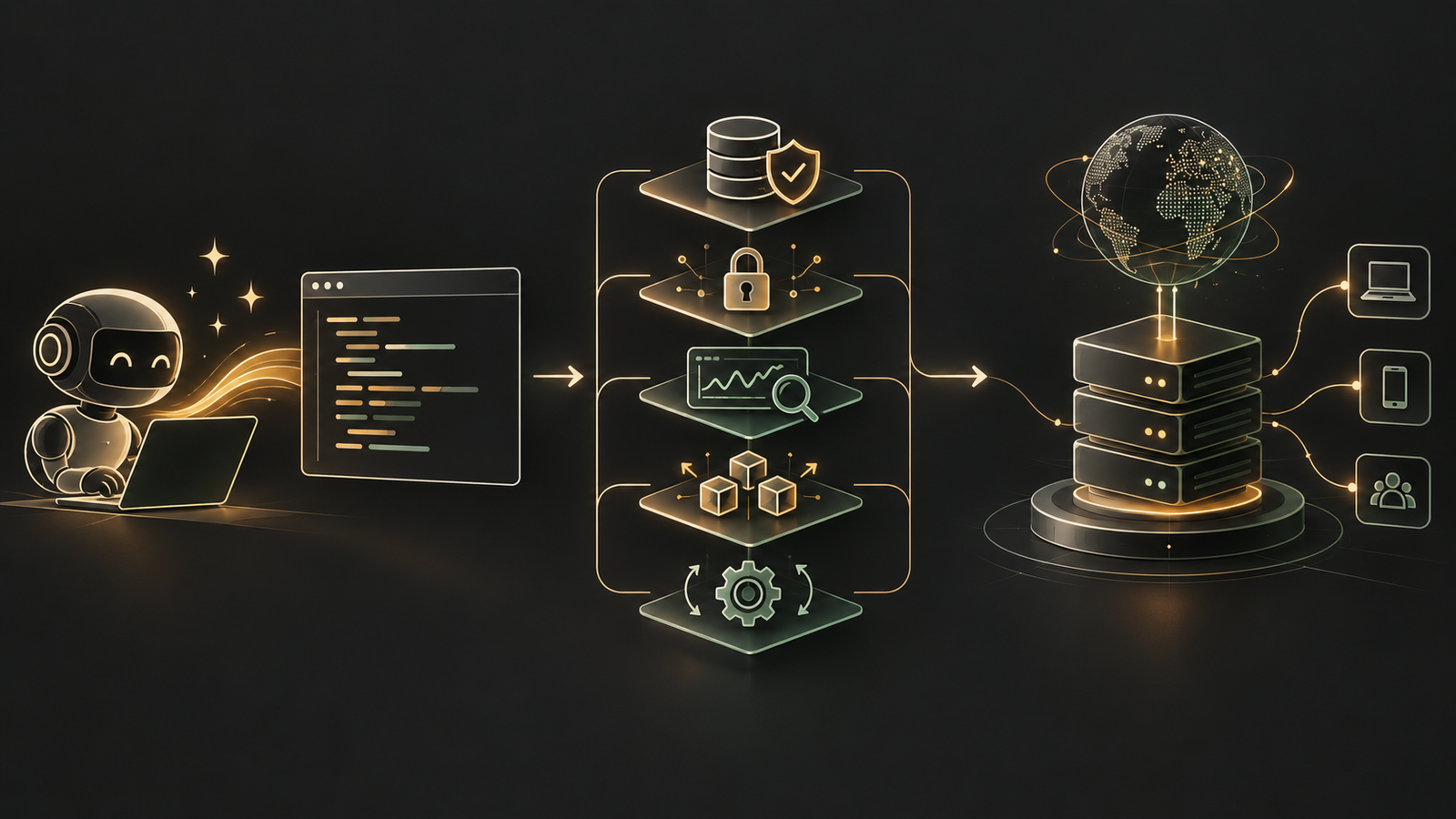
The Debt That Hides Behind Green Checks
Left unmanaged, AI-generated code tends to create the same handful of problems repeatedly. Type or lint errors get suppressed with a disable comment rather than fixed, hiding the underlying issue instead of resolving it. Duplicate utilities and type definitions pile up because a model working from general patterns has no way of knowing a function already exists three files over. Code that works in common cases can fail silently in an edge case the existing tests never exercised. Conventions drift too, since a model reflects the internet's habits rather than a specific team's, so naming, file structure and error handling gradually stop matching.
None of this shows up as a failing build. It shows up as a codebase that gets harder to reason about every month, until a two-day change starts taking two weeks. The fix is not to slow down or stop using AI tools, it is to review their output against a short, consistent set of questions: does this reuse something that already exists rather than duplicating it, does it match the team's established conventions, and can the developer who submitted it explain the logic without leaning on the AI's own comments. That last question is the real gate. Code nobody on the team can explain is a maintenance liability whether a human or a model wrote it.
Building an AI Feature Is Still a Production Problem
The same discipline applies to teams building AI-powered features, not just using AI to write code. Wiring a large language model into a product is, in practice, ordinary software engineering with one added layer: understanding context windows and model parameters well enough to reason about output, grounding answers in a company's own data through retrieval and a vector store when general training data is not enough, and forcing structured output so the rest of the application can rely on it instead of parsing free text. The hardest part is rarely the model call itself. It is the system design underneath it: reliable orchestration, sensible retries and rate limits, and monitoring that shows whether output quality holds up in production, not just on day one.
Where This Leaves Web Development
None of this argues against AI-assisted development. It argues for treating it as production engineering, not a shortcut around it. Faster generation raises the value of the review step, it does not lower it. Teams that pair AI tools with real architectural review, a short pull request checklist and proper system design around any AI feature get the speed benefit without trading it for a codebase nobody fully understands six months later.
Frequently asked questions
Why does AI-generated code create technical debt even when tests pass?
AI-generated code creates technical debt when it passes tests but ignores the architecture around it, for example bypassing a service layer or duplicating an existing utility, so the code runs correctly while the system it lives in gets a little worse over time.
How should a team review AI-generated pull requests?
A team should review AI-generated pull requests against three questions: does the change reuse existing code and patterns rather than duplicating them, does it follow the team's established conventions, and can the submitting developer explain the logic without relying on the AI's own comments.
What is repo awareness in AI-assisted coding?
Repo awareness is an AI tool's understanding of the files, patterns and conventions around a specific change, not just the file it is editing, which is what lets it produce code that fits an existing codebase instead of code that merely runs.
Is building an AI feature different from regular software engineering?
Building an AI feature is mostly regular software engineering, covering system design, orchestration, monitoring and reliable deployment, with one added layer specific to language models such as context handling, retrieval and structured output.
What is retrieval augmented generation used for?
Retrieval augmented generation is used to ground a language model's answers in an organisation's own data by converting that data into embeddings, storing them in a vector database, and retrieving the most relevant matches to feed into the model at query time.
Put this into practice
Explore the services related to this article.
A short note about the product, the timeline and who it is for is enough to start. You will hear back from the engineer who would do the work, not a sales team.
Start a partnership