Skip to content
Hartford, Connecticut · Editorial learning-audio platforms

Learning Audio Platform Development for Hartford Publishers

A podcast archive can support a structured learning journey when editors can select useful segments, order them and publish a playable resource. That requires more than an episode page: the application needs to coordinate content decisions, processing and the learner's final experience. We help Hartford education publishers connect those stages in a maintainable product.

This is HCD, recorded in Ireland, is our delivery reference for a platform combining a podcast archive, free courses, learning journeys and community features. A separate worker assembles journey audio from episode segments. Curiosive uses AI to accelerate engineering under human review and works as a long-term product partner as editorial workflows and learning products evolve.

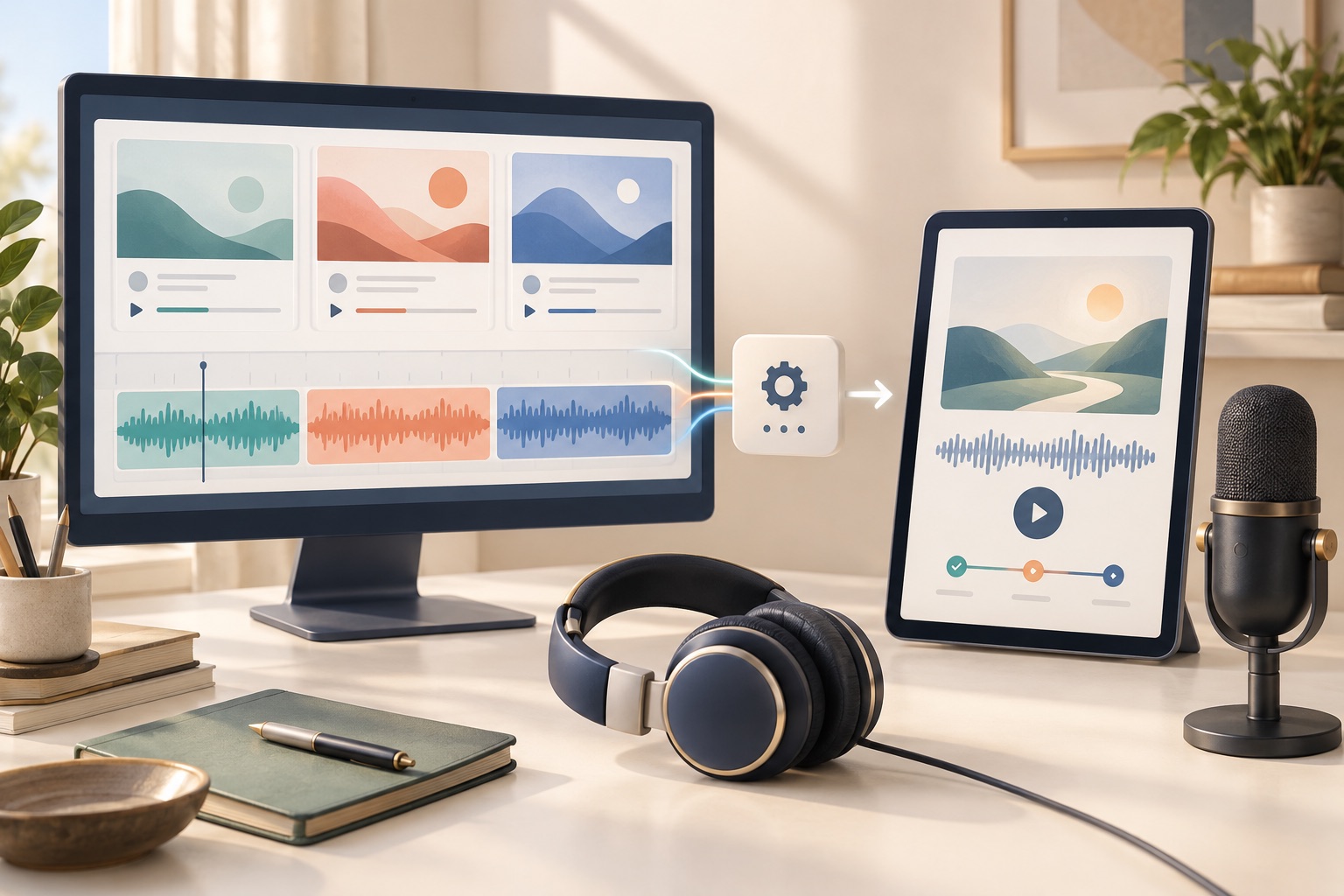
Concept of podcast segments passing through a processing stage into a playable learning-audio journey
AI-generated concept artwork for learning-audio platforms; not a This is HCD screenshot.
5+
years building for production
12
countries the work runs in
100%
of code read by a senior engineer
1 day
to hear back, from the engineer
Browse industry workflows →

Make the editorial selection explicit

Start with the learning objective and the approved source material. Identify the episode, segment boundaries and order that create the intended resource. Keep the source reference attached so an editor can review or correct the selection later. Decide which description and supporting material belong to the journey rather than the original episode. Agree who approves the assembled result before learners receive it. This content model gives the processing stage a defined input instead of leaving editorial decisions inside an implementation.

Relevant work: This is HCD's learning journeys

The published case covers a complete Next.js platform remake with a transcribed podcast archive, free courses, learning journeys and a global designer directory. Members can bookmark, comment, follow others and track course progress. Sanity holds curated episodes, courses and editorial posts; Supabase holds member activity and profiles. A separate worker assembles learning-journey audio from episode segments. The Ireland-recorded delivery provides a reference for editorial content and background processing in a separately scoped Hartford product.

Give processing its own completion and failure rules

Agree what creates a job, how the editor recognizes a pending result and what makes an output ready for review. Decide how retries, duplicate requests and a missing source asset are handled. A failed process should leave an understandable next action and keep an incomplete resource out of the approved learner journey. Store the relationship between the input selection and output so the team can identify what was assembled. Review a failed job alongside a successful one before broadening the archive.

Connect approved audio to the learner experience

Define where the completed resource appears and whether access requires an account. Follow a learner opening the journey, starting playback and returning later. Decide how a revised source segment or changed journey order affects an existing output and any saved progress. Keep editorial changes separate from member activity. AI accelerates familiar interface work and implementation exploration; engineers review content relationships, processing behavior and the release. Editors remain responsible for the learning sequence and publication approval.

Review one editorial selection through a playable learning resource

For a new engagement, bring approved source audio, selected segments and the intended lesson order. Proposed acceptance examples: an editor can identify the exact source segments; the processing request shows the agreed pending state; a failed job can be recovered without publishing an incomplete result; and the reviewed output plays the intended sequence. Define what happens when source content changes after assembly. These are proposed checks for your audio workflow, not additional claims about This is HCD's historical processing tests.

A product partner for the archive's next use

Editors learn which selections take too long, learners reveal confusing steps and new content suggests additional journeys. We work with your team on a shared backlog and reviewed releases so those findings improve the product. Monthly AI-accelerated development starts from $2,000, with capacity, media ownership and operating responsibilities agreed in writing. Curiosive LLC collaborates remotely with Hartford teams through agreed Eastern-time review windows, with engineering led from Ankara. The partnership continues beyond the first assembled learning resource.

Questions

The things people ask before starting.

Can you build a learning-audio platform for a Hartford publisher?

Yes. Bring approved source audio, a representative learning sequence and the editorial process. We can scope the selection, processing and learner-facing workflow together.

What does This is HCD demonstrate?

The Ireland-recorded case covers a podcast and community learning platform, including a separate worker that assembles learning-journey audio from episode segments.

Does audio processing need to run inside the website request?

A background workflow can handle that work separately. We agree its inputs, status, completion and recovery behavior, along with what editors and learners see while it runs.

Can you continue improving the publishing tools?

Yes. A continuing engagement can prioritize editorial efficiency, processing recovery and new learning journeys through a shared backlog, with agreed monthly capacity and reviewed releases.

How it starts

What happens after you write to us.

  1. 01

    You describe the product

    One paragraph on what you are building, roughly when you need it, and who it is for. No brief, no form with fifteen fields.

  2. 02

    You get a reply within a day

    From the engineer who would do the work, not a sales team. If we are not the right fit we say so, and where possible we point you somewhere better.

  3. 03

    You get a scoped plan

    Scope, price and timeline in writing before anything is committed. You decide with the numbers in front of you.

No long contract to begin, no lock-in to our tooling, and the code is yours from the first commit.

Start a conversation
Contact

Looking for an engineering partner for the long haul?

A short note about the product, the timeline and who it is for is enough to start. You will hear back from the engineer who would do the work, not a sales team.

Ankara / Türkiye · Working across European and US time zones