Skip to content
Content management

Headless content management with Sanity

Updated

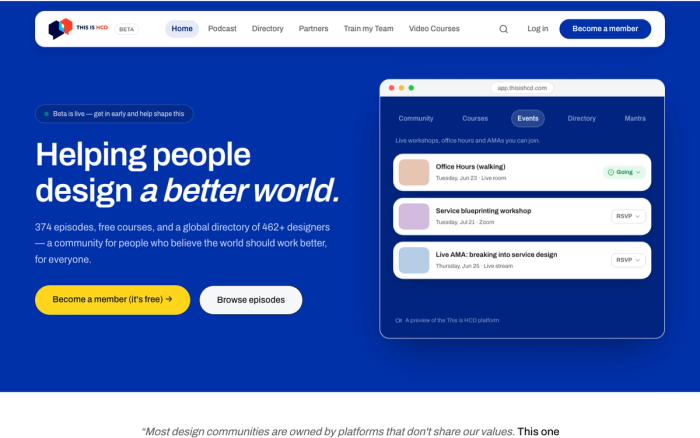
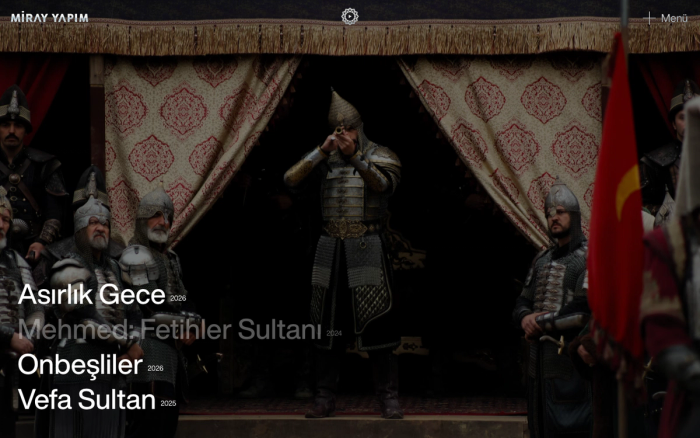
Miray Yapım’s bilingual production catalogue and This is HCD’s editorial archive are published Sanity examples. Their cases establish content-management scope, not that every possible update needs no technical support. Identify the fields editors should maintain, their review process and how approved changes reach the public site.

Choosing a CMS is usually a decision about the content model rather than the interface. A badly built model turns into an admin panel that nobody on the content team wants to open.

24
published portfolio projects
5+
years building for production
12
countries the work runs in
100%
of code read by a senior engineer
1 day
to hear back, from the engineer

The content model comes before the interface

Miray Yapım’s case documents a bilingual Sanity-managed catalogue with detail pages for each production. It does not specify one internal translation-document structure. For a new model, list document types, shared and language-specific fields, relationships and editorial checks. Review representative content with the team before choosing the schema.
When you do not need one

If your content rarely changes and a developer is doing the updates anyway, a CMS is an unnecessary layer. Keeping the text in code is faster and cheaper. We recommend Sanity when someone non-technical will be updating content regularly. Panels installed for the sake of having one generally sit empty, and you have still paid for all the modelling work that went into building them.

The same content on several surfaces

A shared content source can serve multiple interfaces, but each needs its own publishing and update path. Define which records are reused, how previews work and how each surface receives an approved change. This is HCD’s case illustrates editorial content alongside separate member activity; a shared dataset alone does not guarantee that different deployed sites always show the same revision.

Publish an approved content revision

For a static site, content is captured for a published build. An approved change needs the agreed build and release path before it appears publicly; a short cache duration alone does not publish a new snapshot. Define triggers, preview, approval, release ownership and what the editor sees while a change is pending. This keeps publishing expectations separate from request-time caching.

Industry examples for this service

Start with the task you need to improve. These pages connect a published delivery example to discovery questions for a new engagement.

Learning and community platforms

Choose this when public content, courses and member activity need one platform with clear editorial ownership and moderation.

Explore the scope and discovery questions →

Architectural product catalogues

Choose this when buyers need product families and variant detail before a quote enquiry, rather than a general company brochure or checkout.

Explore the scope and discovery questions →

Media-localization review portals

For US media-localization teams reviewing a caption or subtitle file against a named media version, then handing an approved release to a publisher.

Explore the scope and discovery questions →

Architectural material sample requests

For US architectural material suppliers connecting finish-specific sample requests, partial dispatch and approved replacements to a maintained product catalog.

Explore the scope and discovery questions →

New Braunfels, Texas · Group-visit inquiry websites

For New Braunfels attraction operators connecting group-visit package pages to staff-reviewed inquiries with explicit subgroup rotations, arrival details and attendance totals.

Explore the scope and discovery questions →

Hickory, North Carolina · Furniture configuration catalogs

For Hickory furniture manufacturers publishing product catalogs with approved fabric, finish and frame combinations and reviewable configuration enquiries.

Explore the scope and discovery questions →

Dubuque, Iowa · Consignment-equipment catalogue websites

For Dubuque consignment-equipment teams connecting model references, individual unit listings, reviewed condition information and unit-specific enquiries.

Explore the scope and discovery questions →

Charlottesville, Virginia · Conference-session resource libraries

For Charlottesville conference teams maintaining session-resource libraries with edition-specific recordings, transcripts, slide decks and member bookmarks.

Explore the scope and discovery questions →

Sarasota, Florida · Documentary archive websites

For Sarasota documentary teams maintaining public film archives with distinct cuts, contributor credits and approved trailer or screening destinations.

Explore the scope and discovery questions →

Toledo, Ohio · Industrial distributor customer portals

For Toledo industrial distributors connecting maintained product references to buyer-organization quote requests and explicit account access.

Explore the scope and discovery questions →

Bloomington, Indiana · Small-press book catalog websites

For Bloomington small presses connecting published works, edition-specific covers and credits, author profiles and maintained public order destinations.

Explore the scope and discovery questions →

Brevard, North Carolina · Instrument rental enquiry websites

For Brevard instrument-rental teams connecting public model information, requested rental dates and staff-reviewed unit availability.

Explore the scope and discovery questions →

Ames, Iowa · Equipment-parts catalogs

For Ames equipment-parts teams connecting exact catalogue variants, documented equipment-model relationships and quote-request context.

Explore the scope and discovery questions →

Kalamazoo, Michigan · Live-theater production catalogs

For Kalamazoo theater teams connecting a production identity to separate runs, approved cast credits and maintained public ticket destinations.

Explore the scope and discovery questions →

Rutland, Vermont · Community-radio program archives

For Rutland community-radio teams connecting program identities, planned schedule slots and approved recording editions in a maintained audio archive.

Explore the scope and discovery questions →

Henderson, Nevada · Interior-design presentation catalogs

For Henderson interior-design teams connecting material variants, room selections and versioned client presentations to a maintained catalogue.

Explore the scope and discovery questions →

Syracuse, New York · Animation-studio reel websites

For Syracuse animation studios connecting approved reel shots, project credits and maintained public portfolio destinations.

Explore the scope and discovery questions →

Lakeland, Florida · Franchise-location catalog websites

For Lakeland franchise teams connecting approved location records, branch-specific information and the correct contact destination through a maintained website catalog.

Explore the scope and discovery questions →

Lawrence, Kansas · Oral-history audio publishing

For Lawrence archive and cultural-publishing teams connecting approved source excerpts to reviewed oral-history audio editions and maintained public destinations.

Explore the scope and discovery questions →

Bellingham, Washington · Professional mentor directories

For Bellingham professional communities connecting approved mentor profiles, inquiry preferences and a clearly identified contact handoff.

Explore the scope and discovery questions →

Fredericksburg, Virginia · Event-venue catalog websites

For Fredericksburg venue teams connecting a published event space and room layout to the context staff need for an availability inquiry.

Explore the scope and discovery questions →

Eugene, Oregon · Outdoor-brand editorial websites

For Eugene outdoor-brand teams connecting field-story pages, approved media and maintained gear references through an editorial catalogue.

Explore the scope and discovery questions →

Tallahassee, Florida · Association learning portals

For Tallahassee trade and professional associations connecting maintained learning resources to member bookmarks, course progress and editorial ownership.

Explore the scope and discovery questions →

Fort Collins, Colorado · Wholesale product catalogues

For Fort Collins wholesalers developing a product catalogue that makes variants, pack units and sales-enquiry context explicit.

Explore the scope and discovery questions →

Portland, Maine · Film and television production catalogues

For Portland, Maine production teams giving each title a distinct visual identity across catalogue cards, detail pages and narrow screens.

Explore the scope and discovery questions →

Richmond, Virginia · Podcast community saved-content tools

For Richmond podcast and learning communities connecting episode discovery to a member's personal saved-content journey.

Explore the scope and discovery questions →

Greenville, South Carolina · Podcast editorial platforms

For Greenville podcast publishers maintaining episode destinations and approved transcripts through recurring editorial corrections.

Explore the scope and discovery questions →

Dover, Delaware · Architectural-product enquiry websites

For Dover architectural-product suppliers carrying a selected catalogue variant into a useful sales enquiry.

Explore the scope and discovery questions →

Newark, New Jersey · Production-company CMS publishing

For Newark film and television production teams maintaining a cinematic website through structured CMS records.

Explore the scope and discovery questions →

Burlington, Vermont · Professional community directories

For Burlington professional and learning communities building searchable member profiles with an explicit moderation workflow.

Explore the scope and discovery questions →

Hartford, Connecticut · Editorial learning-audio platforms

For Hartford education publishers turning approved podcast segments into curated learning-audio journeys with a background processing workflow.

Explore the scope and discovery questions →

Baltimore, Maryland · Bilingual film and production websites

For Baltimore film teams maintaining paired language versions of company information and individual production pages in one editorial catalogue.

Explore the scope and discovery questions →

Nashville, Tennessee · Podcast-led learning platforms

For Nashville podcast publishers turning an episode archive and transcripts into curated learning journeys with member progress.

Explore the scope and discovery questions →

Detroit, Michigan · Industrial product catalogues

For Detroit manufacturers organizing product families, technical variants and document references into a catalogue that supports quote enquiries.

Explore the scope and discovery questions →

Boston, Massachusetts · Physical and digital game products

For Boston game publishers scoping playable chapters, managed story content and returning-player progress in the web companion.

Explore the scope and discovery questions →

New York · Film and television production websites

For New York film and television production teams that need a cinematic portfolio with maintainable production pages and editorial ownership.

Explore the scope and discovery questions →
Questions

The things people ask before starting.

Can someone non-technical update the content?

Editorial fields and preview can be scoped for a nontechnical team. Agree which changes editors can make, who reviews them and how publishing reaches the site. Existing cases demonstrate content-management delivery, not that every new field or workflow can be changed without development work.

Can we build a multilingual site?

Miray Yapım’s published case is a bilingual website with a CMS-backed catalogue. For a new site, agree language-specific fields, page pairs, translation ownership and checks for missing content. A document structure alone does not guarantee that translations stay complete or synchronized.

Why choose this over WordPress?

If you want content kept independent of one site's templates and reused across several surfaces, headless has the advantage. For a single blog with an established editorial workflow, WordPress can still be a perfectly reasonable choice.

Who owns our content?

The dataset sits in your account and can be exported at any time. During setup we recommend the account is opened in your name, so ownership never becomes a question later on.

How it starts

What happens after you write to us.

  1. 01

    You describe the product

    One paragraph on what you are building, roughly when you need it, and who it is for. No brief, no form with fifteen fields.

  2. 02

    You get a reply within a day

    From the engineer who would do the work, not a sales team. If we are not the right fit we say so, and where possible we point you somewhere better.

  3. 03

    You get a scoped plan

    Scope, price and timeline in writing before anything is committed. You decide with the numbers in front of you.

No long contract to begin, no lock-in to our tooling, and the code is yours from the first commit.

Start a conversation
Contact

Looking for an engineering partner for the long haul?

A short note about the product, the timeline and who it is for is enough to start. You will hear back from the engineer who would do the work, not a sales team.

Ankara / Türkiye · Working across European and US time zones