Skip to content
Lawrence, Kansas · Oral-history audio publishing

Oral History Audio Platform Development in Lawrence, Kansas

An oral-history audio edition may combine excerpts from several approved sources. Editors need to know which recording and range each excerpt uses, and what changes when a clip is corrected or withdrawn. We help Lawrence, Kansas archive and cultural-publishing teams connect that editorial model to an audio platform with reviewable publication steps.

Our This is HCD project, recorded in Ireland, includes transcripts, CMS-managed content and a separate worker that assembles learning audio from episode segments. It provides a reference for source-based audio publishing; oral-history permissions and edition withdrawal would be new requirements. Curiosive uses AI to accelerate engineering under human review and remains a long-term product partner as the collection and publishing process develop.

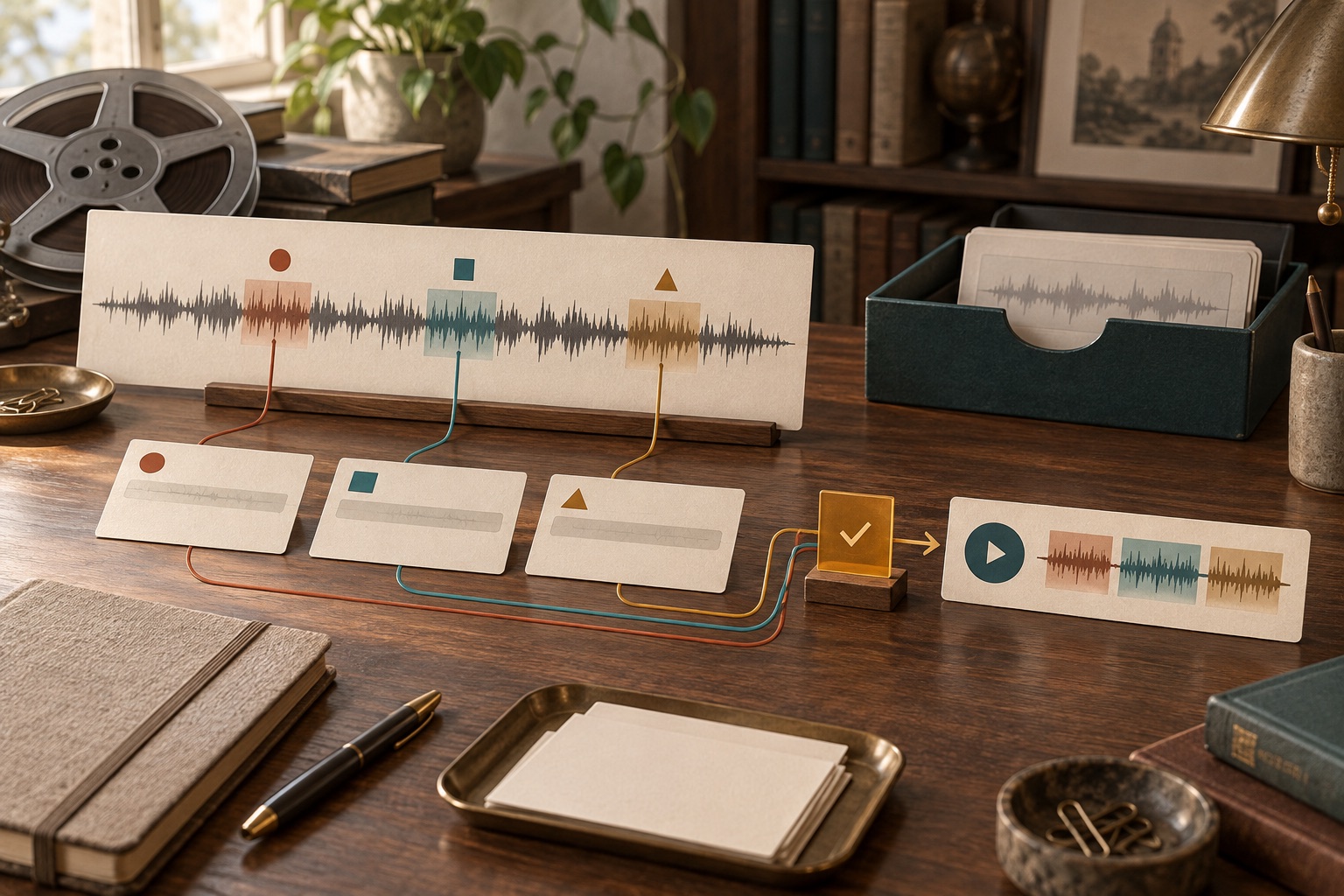
Fictional source waveform and excerpt cards connected through a review gate to an audio edition beside an archive tray
AI-generated oral-history publishing concept; not a This is HCD screenshot, real interview or published transcript.
5+
years building for production
12
countries the work runs in
100%
of code read by a senior engineer
1 day
to hear back, from the engineer
Browse industry workflows →

Keep each excerpt attached to its approved source range

Start with authorized recordings and the references editors use for an excerpt's source and boundaries. Decide how the transcript, editorial description and selected audio range relate to that source. A corrected transcript should have an explicit effect on the excerpt rather than silently changing another record. Keep the approval state and responsible editor understandable before assembly. Review several clips from one recording alongside clips from different sources to settle the relationship model.

Relevant work: This is HCD's content and audio worker

The This is HCD case describes a Next.js platform combining a transcribed podcast archive, free courses, learning journeys and a designer directory. Sanity holds curated episodes, courses and editorial posts, while Supabase holds accounts and member activity. A separate worker assembles learning-journey audio from episode segments. The project is recorded in Ireland. This demonstrates maintained editorial content and background audio assembly; oral-history source approval, edition review and clip-withdrawal rules would be separately scoped.

Build a reviewed edition from a defined excerpt sequence

Agree which approved clips form an edition and what the editor reviews before release. Keep the assembly request attached to that sequence so a later content change does not silently alter an in-progress job. Define the difference between assembled, awaiting review and published output. The public player should identify the intended edition and its approved supporting text. Editors own the selection, context and interpretation of the material presented to listeners.

Give withdrawn material an explicit effect on derived audio

A withdrawn excerpt may already appear in an assembled file, an older edition or a queued job. Decide which outputs need rebuilding, which remain accessible and how public destinations explain their current state under the archive's policy. Review those relationships before implementing publication controls. AI accelerates familiar content interfaces and job mapping; engineers review source identity, stale jobs and release transitions. Archive owners approve permission records and the editorial rules the software follows.

Review an assembled audio edition after a source clip is withdrawn

For a new engagement, bring authorized source audio, approved excerpt references and the editorial publication policy. Proposed acceptance examples: an excerpt retains its source and range; the assembled edition contains the approved sequence; withdrawing a clip follows the agreed rebuilding and visibility rule; and an older public destination explains its current state. Include a corrected transcript and a stale assembly job. These are proposed oral-history checks, not claims about This is HCD's historical archive permissions, clip withdrawal or editorial verification tools.

A product partner as the audio collection grows

New sources and editorial corrections reveal where excerpt tools, assembly review and public edition context need refinement. We work through those findings in a shared backlog and reviewed releases. Monthly AI-accelerated development starts from $2,000, with capacity, source ownership and publication responsibilities agreed in writing. Curiosive LLC works remotely with Lawrence teams through agreed Central-time review windows, with engineering led from Ankara. The partnership continues as the archive and its audio publishing product evolve together.

Questions

The things people ask before starting.

Can you build an oral-history audio platform for a Lawrence team?

Yes. Bring authorized source recordings, approved excerpt references and the publication policy so we can scope content modelling, assembly and review together.

Does This is HCD include these oral-history archive rules?

Its published case covers editorial content and a learning-audio assembly worker. Oral-history approvals, edition review and clip withdrawal would be new requirements.

Can a withdrawn source clip affect audio that has already been assembled?

That can be an agreed requirement. We map each derived edition to its excerpts and define rebuilding, visibility and stale-job behavior under your policy.

Can you support new recordings and publishing workflows after launch?

Yes. A continuing engagement can prioritize editorial tools, source relationships and listener feedback through a shared backlog and reviewed releases.

How it starts

What happens after you write to us.

  1. 01

    You describe the product

    One paragraph on what you are building, roughly when you need it, and who it is for. No brief, no form with fifteen fields.

  2. 02

    You get a reply within a day

    From the engineer who would do the work, not a sales team. If we are not the right fit we say so, and where possible we point you somewhere better.

  3. 03

    You get a scoped plan

    Scope, price and timeline in writing before anything is committed. You decide with the numbers in front of you.

No long contract to begin, no lock-in to our tooling, and the code is yours from the first commit.

Start a conversation
Contact

Looking for an engineering partner for the long haul?

A short note about the product, the timeline and who it is for is enough to start. You will hear back from the engineer who would do the work, not a sales team.

Ankara / Türkiye · Working across European and US time zones