Skip to content
Media-localization review portals

Subtitle Review and Approval Portal Development for US Localization Teams

Updated

A localization team may already use a specialist tool to create subtitle or caption files. Its next problem can be coordinating review: which media cut a reviewer watched, which text file they checked, what remains unresolved and which version the publisher should receive. A portal is useful when those decisions are scattered across files, messages and separate approval records.

Curiosive has delivered captioned playback in Inspire Film, recorded in Spain, and transcript publishing within This is HCD, recorded in Ireland. Those cases provide media and editorial-platform evidence. The reviewer assignments, correction states and versioned approvals described here would be a new scope for your US team. Your agency supplies the language specialists, approved media and quality criteria.

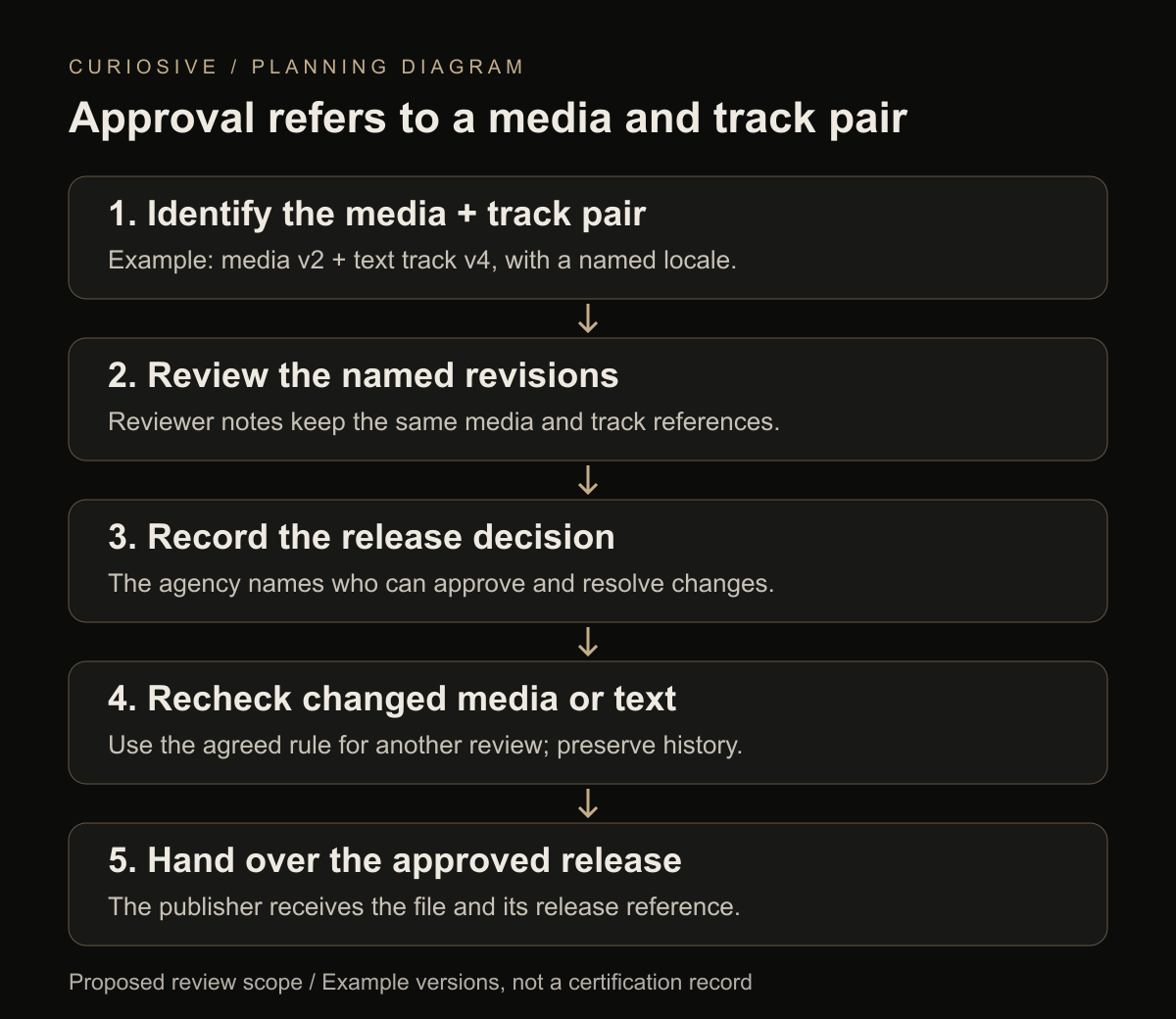
Planning diagram tying a video version and text-track revision to reviewer notes, a release decision and a publishing handoff
Curiosive planning diagram for a new review portal; example version labels, not a client screenshot or certification record.
5+
years building for production
12
countries the work runs in
100%
of code read by a senior engineer
1 day
to hear back, from the engineer
Browse industry workflows →

Decide whether the missing capability is authoring or approval

Observe how the agency produces a file, shares it with a reviewer and releases it to a client today. If its existing subtitling tool already supports the required review and approval task, begin by improving that workflow. A separate portal is useful when the team needs a shared release record across reviewers, client accounts or publishing destinations. Name what stays in the authoring tool and what the portal owns. Timeline editing, automatic translation, transcription and file conversion should each be scoped explicitly rather than assumed from the presence of a player.

Use delivered media and editorial work as the engineering reference

Inspire Film's published React and TypeScript platform uses Supabase and PostgreSQL, adaptive video with captions through Bunny Stream, and live screenings through LiveKit, alongside memberships and administration. This is HCD's Irish platform publishes episodes and transcripts through a Sanity content model while Supabase holds member activity. These are relevant examples of connecting media, accounts and maintained content. They do not establish delivery of a localization agency's reviewer product or professional translation services.

Keep the media version and text-track revision together

A title and language label may not identify what was reviewed. Agree a release record containing the approved media reference, track revision, language or locale and the purpose of the track. Keep those references with review notes and approval decisions. Compare the same draft against two different cuts during discovery so the team can decide how changed timing or content is handled. A revised file should be distinguishable from the file a reviewer already accepted, even when both have the same filename.

Distinguish captions, translated subtitles and review criteria

Agree the intended track before choosing acceptance examples. W3C WAI distinguishes same-language captions from subtitles that translate spoken audio, while noting that terminology varies by region. The agency should name the language owner, required audio information and the publisher's review criteria for each track. Use the client's approved sample and guidelines during implementation. A portal records and supports the review process; a completed status by itself does not certify language quality or accessibility conformance.

Make correction, review and release separate decisions

Define who can upload a revision, comment on it, request a change and approve the release. Agree whether a client reviewer and an internal language reviewer have different responsibilities. Notes can reference the part of the media being discussed without silently applying an edit to the source file. Begin with one complete review cycle, including a requested correction and a revised file. Decide which unresolved items block release and who can resolve that status; engineer the agreed rules rather than inventing a quality score.

Agree what changes require another review

A revised media cut, a corrected track and a new requested locale are different changes. Name the person who decides whether a previous approval still applies, and how the portal displays that decision. Keep earlier review records understandable while the current release is being prepared. Review a new cut after approval and a minor correction before delivery as separate examples. If machine-generated text is part of the workflow, define its draft status and the named review step before it can reach a publishing destination.

Hand over the approved file with a clear release record

The publisher needs the agreed file format and the version the agency approved, not simply the most recently uploaded attachment. Specify the target player or publishing system, who confirms its accepted format and how a failed transfer is reported. Keep the file and approval record together through download or an explicitly scoped integration. An automated export, conversion service or delivery acknowledgement requires its own behavior and owner. Start with a reviewed manual handoff if that is sufficient for the first release.

Accept one reviewed track through to its publishing handoff

For a new engagement, bring an approved media sample, two track revisions, reviewer roles and the publisher's accepted delivery format. Proposed acceptance examples: each review identifies its media and text-track versions; a reviewer can request a correction without approving the draft; a revised cut follows the agreed re-review rule; and the delivered file matches the approved release record. Include interrupted playback, a missing track and a reviewer without release permission. These are proposed agency-portal checks, not claims about historical Inspire Film or This is HCD review tools, translation services or certification.

Work with a US company and an Ankara-led engineering team

Curiosive LLC is a US company, with engineering led from Ankara, Türkiye. Monthly AI-accelerated development starts from $2,000, with scope, capacity and operating responsibilities confirmed in writing. Bring one approved media sample, track revisions, reviewer roles and the existing authoring and publishing tools. Agree US review windows and a bounded first release. Your team retains responsibility for media permissions, language work and its acceptance standards; the engineering engagement covers the agreed portal and integrations.

Questions

The things people ask before starting.

Have you already delivered a subtitle-review product for a US agency?

The cited deliveries cover captioned streaming in Inspire Film in Spain and transcript/editorial publishing in This is HCD in Ireland. Reviewer assignments, correction workflows and versioned agency approvals would be new requirements. They are not described as a delivered US localization product.

Does the portal replace our professional subtitling software?

Only if replacement is explicitly scoped and justified. A first portal can accept files from the existing authoring workflow and coordinate review, approval and handoff. Editing timelines, retiming, translation and conversion need their own requirements.

Can a generated draft be published automatically?

Define the draft and release rules with the responsible agency owner. The proposed first scope includes a named review decision before publication. It does not promise automatic language approval, translation quality or certification.

What happens when the video changes after approval?

The agency chooses the re-review rule. Keep the media version, track revision and earlier approval reference visible, then require the agreed decision before treating the new pair as the approved release.

What should we prepare for the first review?

An approved media sample, two track revisions, one reviewer correction, the roles that can approve a release and the publisher's expected file format. Include a changed media cut and a failed handoff so the first scope covers recovery as well as a successful demo.

How it starts

What happens after you write to us.

  1. 01

    You describe the product

    One paragraph on what you are building, roughly when you need it, and who it is for. No brief, no form with fifteen fields.

  2. 02

    You get a reply within a day

    From the engineer who would do the work, not a sales team. If we are not the right fit we say so, and where possible we point you somewhere better.

  3. 03

    You get a scoped plan

    Scope, price and timeline in writing before anything is committed. You decide with the numbers in front of you.

No long contract to begin, no lock-in to our tooling, and the code is yours from the first commit.

Start a conversation
Contact

Looking for an engineering partner for the long haul?

A short note about the product, the timeline and who it is for is enough to start. You will hear back from the engineer who would do the work, not a sales team.

Ankara / Türkiye · Working across European and US time zones