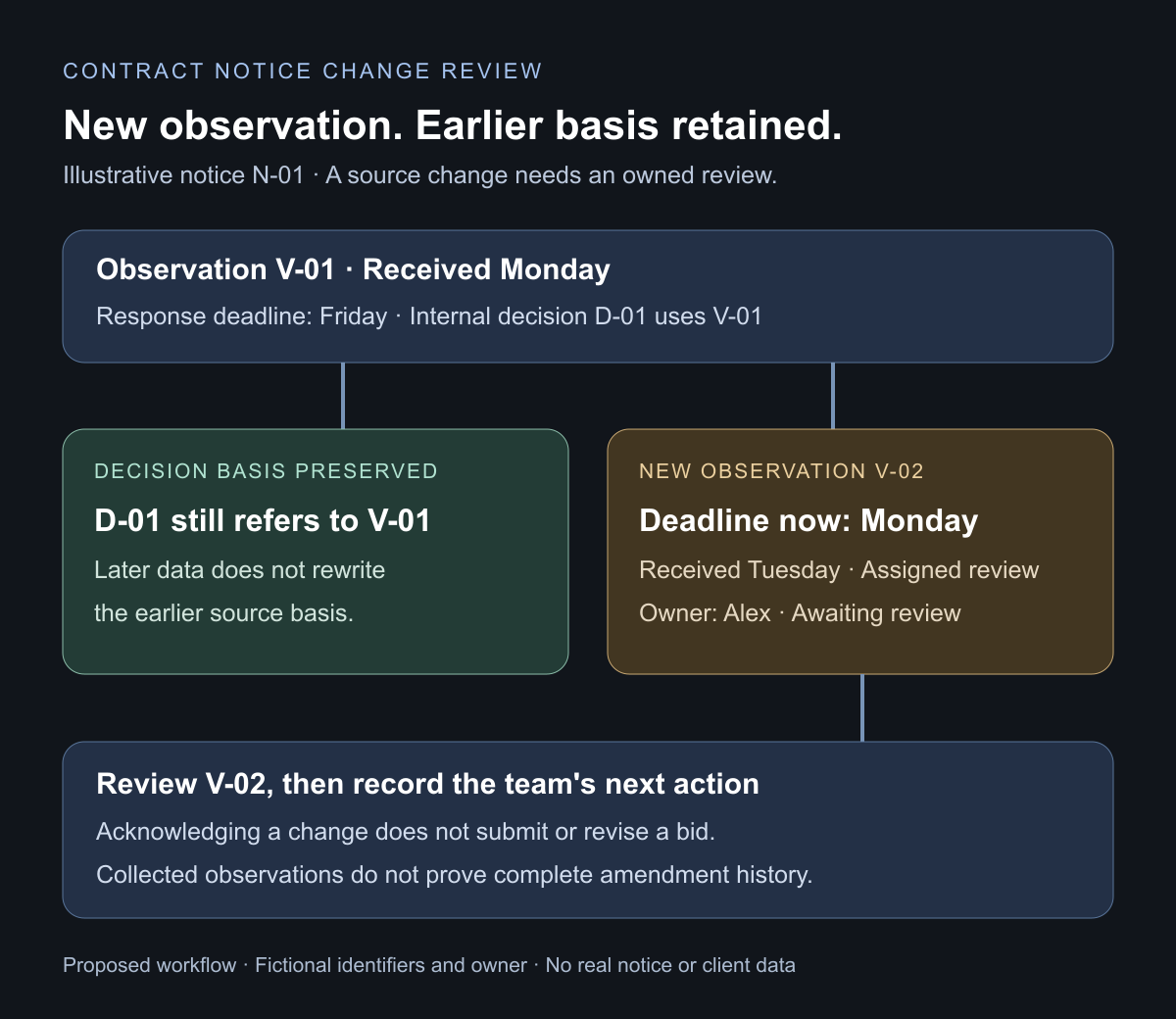
SAM.gov lets anyone search contract opportunities; an account adds saved searches and following changes. If a supplier needs discovery and source notifications, test that official workflow first. A custom application needs a concrete additional task, such as assigning review across a team and retaining the source basis behind an internal decision. Bring a notice your team has actually reviewed and a later change. Walk through how the responsible person finds the change, records a response and hands the work on. That example establishes scope more usefully than a generic request for a procurement portal.
Delivered reference: Auditional's opportunity records and imports
The published Auditional case describes an actor platform used by more than 2,000 actors. Chrome, Safari and Firefox extensions import auditions from Actors Access and Casting Networks; auditions can also be added manually. The web application tracks statuses and deadlines and presents insights on auditions, callbacks and bookings. Svelte, TypeScript, Firebase and Tailwind CSS form the stack. The project is recorded in the United States. These are delivered record and import capabilities, not evidence of contract-notice monitoring, amendment interpretation, bid preparation or government-system submission.
Separate a notice, its observations and the team's decision
Define source identity before importing data. Retain the source owner, notice identifier and official destination. A solicitation number can help relate notices, but should not silently merge different notices or notice types. Model an observation as what the approved source provided when it was received, with a receipt time and the supplied fields. The team's decision is a separate record that names its source basis. A later observation can become the current display without rewriting the information behind an earlier decision. Agree which observations must be retained and who can correct a mistaken association.
Scope source access before promising change history
GSA's public opportunities API documentation says it supplies the latest active version and directs readers to SAM.gov Data Services for all versions. It requires an API key and describes daily active-notice updates and weekly archived-notice updates. This is a source constraint to assess, not a Curiosive connection already in place. Comparing observations collected by your product cannot prove it captured every intermediate change. Agree the authorized source, retained coverage and freshness wording before implementation. Assess historical access separately if complete version history is a requirement; do not promise real-time amendment coverage from a latest-version feed.
Turn a detected change into an owned review
Specify which changed fields should open a review: for example a response deadline, source status or an attachment reference. Show the previous observed value, the new value, both observation times and a link back to the source. Preserve an incomplete date exactly enough for staff to see what needs checking; do not invent a time zone. Assign a responsible reviewer and distinguish awaiting review, acknowledged and action recorded under your approved rules. Acknowledging a change means the team has recorded a review action. It does not confirm that a bid was revised, received or accepted by the contracting office.
Keep internal work separate from external events
The team may decide to investigate, defer or stop pursuing an opportunity, while the official notice has its own state. Store those concepts separately. If staff records an external submission or receipt, define what evidence supports that record and where it is retained. A tracker save must not be described as sending a response to an agency. An attachment link changing or becoming inaccessible also needs its own review rule; a URL alone does not establish what document was previously available. Staff own document interpretation and any resulting procurement action. The software implements their agreed tracking rules.
Make repeated imports and failed refreshes visible
Use stable identities and an agreed comparison rule so importing the same observation does not duplicate the notice or create a second identical review. Test what happens when a newer observation arrives while the previous review is still open: the queue should explain which observation is awaiting attention. A failed refresh should leave the last received information dated and make the source failure visible to the responsible team. A notice missing from a later response is an exception to investigate under the source policy, not automatic proof of withdrawal. Manual entry can establish this model before an API or browser import is separately assessed.
Use a small decision aid before commissioning the product
Bring four records to the first review: an unchanged notice, one with a changed deadline, two notices sharing a solicitation number, and a failed refresh. For each, name the source basis, current observed value, review owner and evidence that closes the review. If official following plus a shared work list handles those records clearly, that may be enough. Consider custom development when staff repeatedly lose the decision basis or cannot assign and resolve changes across the team. Agree a first release around those examples before adding wider sources, document analysis or automatic alerts. No search volume or procurement outcome is assumed by this brief.
Review a changed deadline without rewriting the earlier decision
For a new engagement, bring authorized notice examples, a source-change policy and your team's internal decision states. Proposed acceptance examples: receiving notice N-01 again creates no duplicate; a changed response deadline creates a review against the new observation; the earlier decision still names its original source basis; acknowledging that change does not submit a bid; and a failed refresh leaves the last observed value visibly dated. Include two notices sharing a solicitation number, a missing deadline and an unavailable attachment. A later observation must not be presented as complete amendment history. These are proposed contract-notice checks, not claims about Auditional's delivered imports or federal procurement integrations.
Work with a US company and an Ankara-led engineering team
Curiosive LLC is a US company, with engineering led from Ankara, Türkiye. Monthly AI-accelerated development starts from $2,000, with scope, capacity and operating responsibilities agreed in writing. Bring authorized source examples, your existing tracking process and a named owner for notice interpretation. Engineers can use AI to accelerate familiar implementation work under human review; source semantics and review decisions remain explicit requirements. Agree US review windows and a bounded release that your staff can verify from source receipt through a completed internal review.