Skip to content
Film distributor screener portals

Private Screener Portal Development for US Film Distributors

Updated

A film distributor may need to show an approved screener to a named buyer before discussing a territory, release window or licensing arrangement. The useful task is controlled viewing followed by a clear enquiry. A public video library, a festival jury room and a rights-buying portal have different records and decisions, even when all three contain a player.

Curiosive's Inspire Film delivery is recorded in Spain. It supplies relevant evidence for adaptive film playback, captions, memberships, live screenings and administration. This page scopes a different product for US distribution teams: buyer invitations, viewing windows and rights-enquiry handoffs. Those distributor-specific rules would be new requirements agreed with your team.

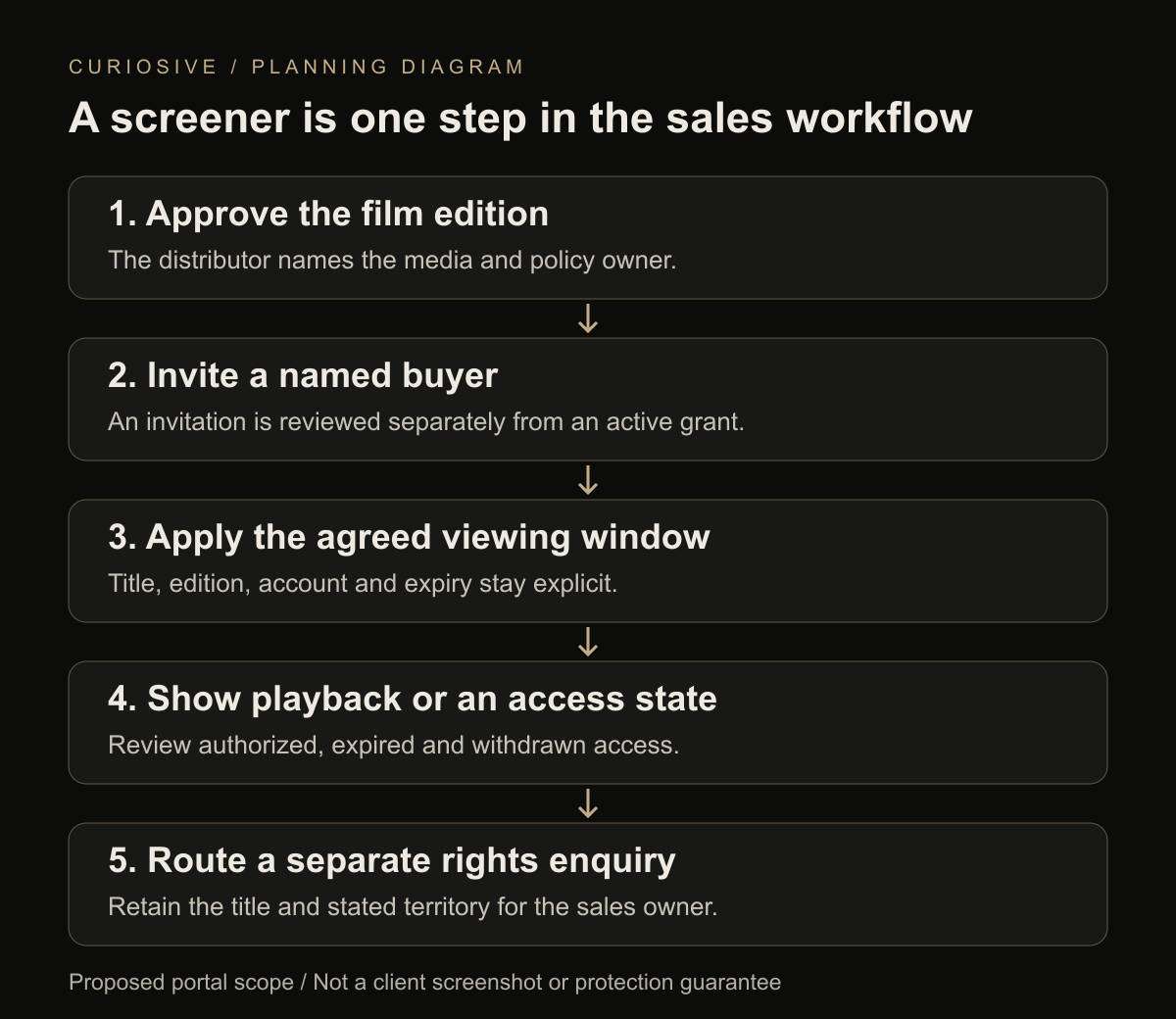
Planning flow from an approved film edition through a named buyer and viewing window to playback and a separate rights enquiry
Curiosive planning diagram for a new distributor portal; not an Inspire Film screenshot or a delivered rights-management system.
5+
years building for production
12
countries the work runs in
100%
of code read by a senior engineer
1 day
to hear back, from the engineer
Browse industry workflows →

Define the screening use before building the buyer area

Begin with the titles the distributor is allowed to show, their approved editions and the people who can approve access. Record the intended screening use, the buyer reference, the requested territory and the date range the team wants to support. A buyer's stated territory should remain a business record, not an assumption inferred from their current location. Decide whether a request needs staff approval or follows a pre-approved invitation. The distributor supplies its rights and media policies; the portal implements the agreed access and enquiry workflow.

Relevant delivery: Inspire Film's streaming platform in Spain

The published Inspire Film case covers a React and TypeScript application on Supabase and PostgreSQL. Bunny Stream provides adaptive film and course playback with captions. LiveKit supports live screenings and events, alongside memberships, Stripe checkout and administration. Guided experiences continue after a film, with recommendations based on a short questionnaire. This demonstrates a connected streaming product. Distributor invitations, territory-specific access, expiring screener links and rights negotiations are separate scope decisions; they are not presented as features delivered in that case.

Separate the public title catalogue from the private screener

Decide which title description, artwork, trailer and contact information can be public. Keep the full screener's destination and access records in the private viewing workflow. A buyer should understand which title they are requesting without an invitation accidentally making the film publicly available. Review the catalogue, an approved invitation and the destination reached by an unauthenticated visitor as different acceptance examples. If the portal also needs public promotional pages, agree their editorial owner and stable destinations independently from the private playback route.

Treat an invitation and active viewing access as different records

An invitation identifies a proposed viewer; a viewing grant determines what that account can currently open. Agree the title or edition, the permitted period, the staff owner and the withdrawal rule for that grant. Review a forwarded invitation, a saved playback URL after expiry and a buyer who is permitted to view one title but not another. Define how an already-open session behaves when access changes, including which behavior the media provider can support. The interface and the access checks need to follow the same approved policy.

Keep the approved edition clear when media changes

Name the person who approves a replacement file, captions or artwork. Decide whether an existing buyer should keep the earlier edition, receive the new one or wait for a renewed grant. Give staff an explicit reference for the asset shared with a buyer and the version discussed in an enquiry. Start with one title that changes during review rather than assuming every replacement can reuse the earlier link. This is an operating decision for the new distributor portal, not a historical claim about Inspire Film's asset replacement process.

Carry viewing context into a rights enquiry

Agree which information the sales team needs: title, viewed edition where relevant, buyer contact, stated territory and the proposed use or window. Route that enquiry to the named owner or an agreed existing system. Keep a commercial enquiry separate from granting viewing access or accepting a licensing agreement. A CRM integration, online rights checkout or automated contract flow needs its own assessment. Review an enquiry from a buyer whose viewing period has ended, so the sales handoff remains understandable without silently extending access.

Choose playback and protection requirements before scaling the catalogue

Bring the approved video and caption assets, the devices buyers use and any content-protection requirements to the first review. Agree playback recovery, caption selection and the information staff can use to investigate an unavailable screener. Watermarking, download controls or DRM require a specific provider and implementation assessment; membership access by itself does not establish those protections. Compare a small invitation-and-viewing release with a larger portal before adding every title or sales-system integration. Use acceptance evidence from the agreed workflow rather than a promise about leakage prevention or deal conversion.

Accept one title from buyer invitation through rights enquiry

For a new engagement, bring one approved film edition, two sample buyer roles, the viewing-window policy and the person receiving rights enquiries. Proposed acceptance examples: an approved buyer reaches the intended edition; an expired or withdrawn grant follows the agreed access rule even from a saved URL; a replaced asset has an explicit edition policy; and a rights enquiry retains the title and stated territory without creating a new viewing grant. Review captions and interrupted playback on the named devices. These are proposed distributor-portal checks, not claims about Inspire Film's historical buyer invitations, rights transactions or protection guarantees.

Work with a US company and an Ankara-led engineering team

Curiosive LLC is a US company, with engineering led from Ankara, Türkiye. Monthly AI-accelerated development starts from $2,000, with scope, capacity and release responsibilities confirmed in writing. Bring one approved title, the buyer and staff roles, the access policy and the existing sales handoff. Agree US working-hour overlap and a bounded first release. Streaming services, licensed media responsibilities and any continuing operations are specified separately so the engineering scope is reviewable.

Questions

The things people ask before starting.

Does Inspire Film demonstrate a film-rights marketplace?

Its Spain-recorded delivery demonstrates adaptive streaming, captions, live screenings, memberships, payments and administration. Buyer invitations, territory-specific viewing grants and rights transactions would be new requirements, not features inferred from that case.

Can we start without online rights checkout?

Yes. A first scope can connect an approved title, a buyer invitation, a defined viewing period and an enquiry to the sales team. Keep access approval and commercial negotiation as separate decisions. Add payment or contract integrations only when their rules and owners are agreed.

Does private account access guarantee that a film cannot be copied?

No such guarantee is made here. Specify the protections you need and assess the media provider and implementation against those requirements. Account access, watermarking, download restrictions and DRM are different scope items with different acceptance checks.

How do viewing windows relate to a buyer's requested territory?

The distributor defines the authorized viewing policy. Keep the requested territory and commercial context in the buyer record, and implement only the access decisions the responsible staff approves. Do not treat a visitor's apparent location as confirmation of their commercial rights.

What should we bring to discovery?

One approved screener and captions, public title metadata, sample buyer and staff roles, the invitation and expiry rules, any required media protections and a representative rights enquiry. Identify who approves each item and which existing system receives the sales handoff.

How it starts

What happens after you write to us.

  1. 01

    You describe the product

    One paragraph on what you are building, roughly when you need it, and who it is for. No brief, no form with fifteen fields.

  2. 02

    You get a reply within a day

    From the engineer who would do the work, not a sales team. If we are not the right fit we say so, and where possible we point you somewhere better.

  3. 03

    You get a scoped plan

    Scope, price and timeline in writing before anything is committed. You decide with the numbers in front of you.

No long contract to begin, no lock-in to our tooling, and the code is yours from the first commit.

Start a conversation
Contact

Looking for an engineering partner for the long haul?

A short note about the product, the timeline and who it is for is enough to start. You will hear back from the engineer who would do the work, not a sales team.

Ankara / Türkiye · Working across European and US time zones