Skip to content
Edge infrastructure

Edge infrastructure with Cloudflare Workers

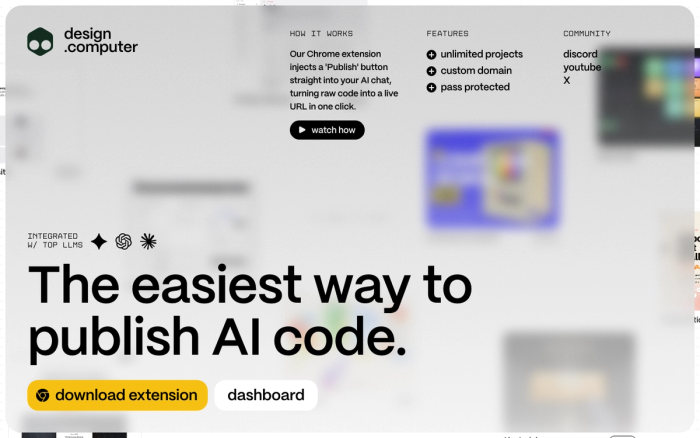
All of design.computer runs on Cloudflare: application logic on Workers, object storage in R2, the database in D1 and custom domains provisioned on demand.

Edge infrastructure is not the right choice for every product. This page covers where it genuinely pays off and which constraints you will have to live with if you decide to build there.

24
published portfolio projects
5+
years building for production
12
countries the work runs in
100%
of code read by a senior engineer
1 day
to hear back, from the engineer

Where it pays off

In design.computer's published scope, Workers handle publishing and routing, R2 stores pages and D1 records projects. Custom domains are provisioned through Cloudflare. For another product, compare the workload, storage needs and operating responsibilities with the current server setup before choosing an edge architecture; this example does not establish a speed or cost saving for your application.
Know the constraints before you start

A migration scope should list runtime dependencies, request duration, background jobs, connection requirements and the data each operation touches. Check those requirements against the intended deployment and test a representative workflow before moving it. Agree what can move, what needs a separate service and what must stay on the current backend, with rollback and operational ownership defined in the release plan.

When D1 and R2 are enough

D1 is fine for read-heavy data at moderate scale. If you have heavy write traffic or need complex analytical queries, a managed PostgreSQL is the better answer. R2 has no egress fee, which makes cost predictable for image and file delivery. We make the choice based on the read and write balance of the product, not because a particular service happens to be fashionable at the moment.

Debugging works differently

Collecting logs from code running at the edge and reproducing a fault there is not the same as doing it on a single server. There can be small differences between the local development environment and production behaviour. That is why we set up logging and monitoring on the first day, rather than trying to build observability while an incident is already in progress and nobody can see what happened.

Industry examples for this service

Start with the task you need to improve. These pages connect a published delivery example to discovery questions for a new engagement.

Questions

The things people ask before starting.

Do Cloudflare Workers replace a conventional server?

Not always. They are very good for short-lived requests and distributed read load, and unsuitable for long-running jobs. In most products, using both together turns out to be the most balanced solution.

Can we move our existing application to the edge?

It depends on the libraries you use. We run a compatibility review first and share in writing what can move, what has to stay on a server, and what would need rewriting before it could move at all.

How does the cost change?

It generally scales with request count, and there is no cost for a server sitting idle. On products with heavy file delivery, R2 not charging egress makes a noticeable difference to the monthly bill.

Can you automate domain management?

Yes. At design.computer, custom domains are provisioned programmatically through Cloudflare, so no manual step is left on the user's side. That automation is why the publishing flow can be a single click.

What do you need to assess edge infrastructure versus our current server?

Share the repository, runtime dependencies, representative request timings, background jobs and storage requirements. Describe the deployment process and who responds to incidents. The assessment should identify a bounded workflow to validate, its acceptance checks and a rollback path before a wider migration is agreed.

How it starts

What happens after you write to us.

  1. 01

    You describe the product

    One paragraph on what you are building, roughly when you need it, and who it is for. No brief, no form with fifteen fields.

  2. 02

    You get a reply within a day

    From the engineer who would do the work, not a sales team. If we are not the right fit we say so, and where possible we point you somewhere better.

  3. 03

    You get a scoped plan

    Scope, price and timeline in writing before anything is committed. You decide with the numbers in front of you.

No long contract to begin, no lock-in to our tooling, and the code is yours from the first commit.

Start a conversation
Contact

Looking for an engineering partner for the long haul?

A short note about the product, the timeline and who it is for is enough to start. You will hear back from the engineer who would do the work, not a sales team.

Ankara / Türkiye · Working across European and US time zones