Skip to content
Agentic mobile development

Agentic Mobile App Development for iOS and Android

Updated

Coding agents can now write the screens of a mobile app quickly. The trouble is that the parts of an app that hurt users are rarely the screens. A login token kept somewhere readable, a purchase unlocked on the device's say-so, a sync that loses an order when the connection drops, a privacy declaration that does not match what an analytics SDK actually sends. Faster code makes these mistakes faster too.

Curiosive is an AI-native software studio in Ankara, Türkiye, building with AI coding agents under senior engineer review. We ship iOS and Android apps from one React Native and TypeScript codebase, with a backend such as Supabase. Agents do the volume. Engineers design the data model, authentication, payment paths and anything touching personal data, and read every diff before it merges. This page sets out how that split works in practice.

24
published portfolio projects
5+
years building for production
12
countries the work runs in
100%
of code read by a senior engineer
1 day
to hear back, from the engineer

What a coding agent does in a React Native app project

In a mobile project the agent takes the large, well-specified middle of the work. It scaffolds screens from agreed designs, wires up navigation stacks and tabs, builds list views for long feeds, writes form validation that applies the same rules as the server, and adds the loading, empty and error states that tend to be skipped late in a sprint. It writes unit and component tests next to the code, drafts store listing text for an engineer to edit, and carries out refactors that touch hundreds of files, such as moving every network call behind one typed client. We use Claude Code and Cursor. The agent works inside the real repository: it reads the existing code before changing it, plans, implements, then runs the type checker, linter and test suite before it proposes anything. It does not decide what the product should do. It works from a scoped task that an engineer wrote.
The task and review loop in agentic mobile app development

Every piece of work starts as a written task. An engineer sets out what should happen, the acceptance criteria that prove it, and the boundaries the agent must not cross: files it may not touch, dependencies it may not add, an authentication module it may read but not change. The agent works through the task and proposes a change with its tests. A senior engineer reviews every diff before it merges, and agents never merge their own work. Review reads for more than correctness. Does the change follow the patterns already in the codebase? Does a new package bring dependency risk? Has a secret crept into a config file? Is input validated where it enters? Continuous integration then re-runs the checks on every change. When review catches a problem, it is fixed before the merge, and each cycle aims to leave the codebase easier to change than it was.

What engineers never delegate on iOS and Android, and why

Some parts of a mobile app fail quietly and expensively, so engineers design them and review them line by line. Tokens go in the iOS Keychain or are encrypted with an Android Keystore key, never left in AsyncStorage where a backup or a compromised device can expose them. Auth refresh has to cope with several requests hitting an expired token at once: they should share one refresh call, or a rotated refresh token can be spent twice and the user is logged out. Purchases and subscriptions are confirmed on the server through receipt or entitlement checks, because a check that only runs on the phone can be bypassed. Offline and reconnection behaviour decides whether a queued order is sent once, twice or never. Permission prompts need timing and wording a person has judged, because a refused camera or notification permission is hard to win back. An agent may draft code in all of these areas. It does not decide them.

Store review, privacy declarations and accessibility rules for apps

Store submission is where a gap between the code and the paperwork shows. Since 1 May 2024, uploading a new or updated app to App Store Connect has required approved reasons in its privacy manifest for each listed required-reason API the code uses. Google Play requires every published app, testing tracks included, to complete the Data safety form and keep it accurate, including data collected through third-party SDKs. An iOS app that supports account creation must let users start account deletion inside the app, and deactivation alone does not count; Google Play asks for an in-app path and a web link. Since 31 August 2026, new apps and updates on Google Play must target Android 16 (API level 36), or API 35 for Wear OS and Android Automotive OS. In the EU, the European Accessibility Act covers consumer services such as e-commerce and consumer banking provided after 28 June 2025, with an exemption for microenterprises. Agents draft declarations from the code. Engineers check them against every SDK the app ships.

Cost and timelines with AI coding agents: what changes, what does not

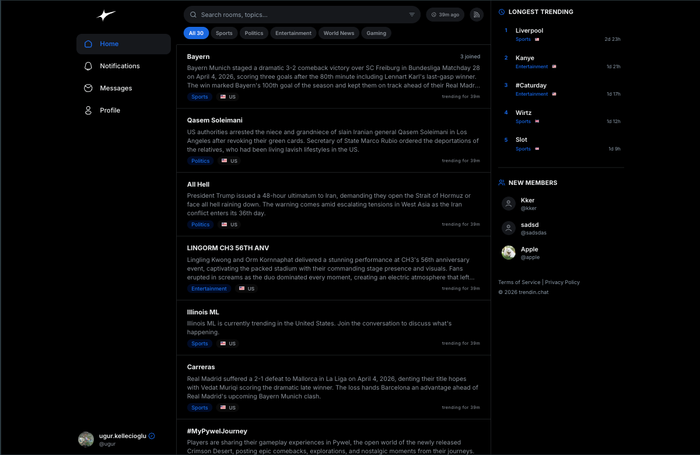
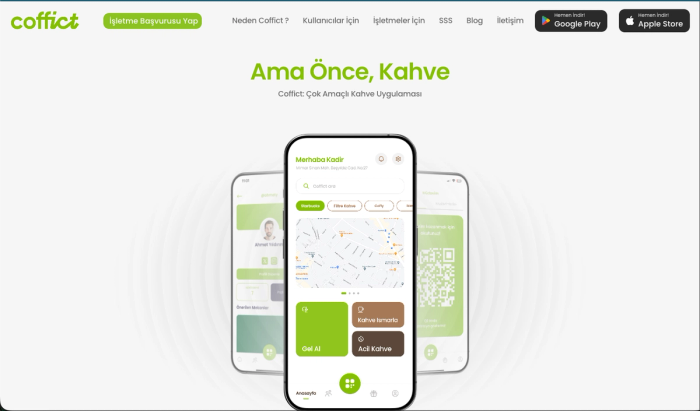
Coding agents assist scoped implementation and checks; the release still depends on product decisions, design, review and platform requirements. Agree the cadence and call schedule for the actual work rather than assuming a weekly increment. TrendinChat’s case records a historical two-week build, and Coffict’s case describes ordering and loyalty in React Native. Those examples establish scope, not a timetable or cost saving for another application. Work runs as AI-accelerated development, starting from $2,000 per month, with scope agreed in writing.

Questions

The things people ask before starting.

What is agentic mobile app development?

It is building iOS and Android apps with AI coding agents doing much of the implementation inside the repository, while a senior engineer writes the task, sets its boundaries and reviews every diff before it merges. Agents scaffold screens, navigation, forms and tests. Engineers own token storage, auth refresh, purchase checks, offline behaviour, permission prompts and privacy declarations.

Is code written by AI coding agents safe to ship to the App Store and Google Play?

It can be, provided it passes the same gates as any other code. Every change runs through the type checker, linter and test suite, is re-checked in continuous integration and is read by a senior engineer before it merges. Security review covers secrets handling, input validation, access control and dependency risk. Agents never merge their own work.

Which framework do you use to build iOS and Android apps?

We use React Native with TypeScript, so one codebase reaches both the App Store and Google Play, with a backend such as Supabase or Firebase. Platform-specific pieces, such as secure storage in the iOS Keychain and the Android Keystore, are handled per platform. TrendinChat and Coffict are both React Native apps we have shipped.

Can a studio in Türkiye work on an app that holds EU or UK users' personal data?

Yes, provided a transfer tool covers it. As of 2 October 2026, Türkiye is not on the European Commission's adequacy list, so EU personal data reaching a studio there needs a transfer tool such as Standard Contractual Clauses. EDPB guidance treats remote access, even on-screen viewing, as a transfer when the transfer criteria are met. UK adequacy regulations do not cover Türkiye either, so UK transfers use the ICO's IDTA or its Addendum. Confirm specifics with a lawyer.

How do time zones work with a mobile app studio in Ankara?

Agree the cities, actual hours and decision deadlines of the people doing the work. A region label does not promise live overlap or a particular call time. The outsourcing comparison includes dated New York, Los Angeles and Ankara examples using hypothetical working hours; use them to plan, then confirm schedules for the engagement.

How it starts

What happens after you write to us.

  1. 01

    You describe the product

    One paragraph on what you are building, roughly when you need it, and who it is for. No brief, no form with fifteen fields.

  2. 02

    You get a reply within a day

    From the engineer who would do the work, not a sales team. If we are not the right fit we say so, and where possible we point you somewhere better.

  3. 03

    You get a scoped plan

    Scope, price and timeline in writing before anything is committed. You decide with the numbers in front of you.

No long contract to begin, no lock-in to our tooling, and the code is yours from the first commit.

Start a conversation
Contact

Looking for an engineering partner for the long haul?

A short note about the product, the timeline and who it is for is enough to start. You will hear back from the engineer who would do the work, not a sales team.

Ankara / Türkiye · Working across European and US time zones