Skip to content
Montenegro · Agentic mobile development

Mobile App Development for Montenegro, in Cyrillic and Latin

Localising an app for Montenegro means two alphabets and five languages in official use, not one translation file. Add a national consent rule for anything an app stores on the phone, with fines tied to annual revenue, a new tax reporting duty for apps that connect sellers with other users, and two app stores with their own privacy paperwork. Most of what decides whether an app ships has little to do with the screens.

Curiosive is a studio in Ankara, Türkiye, that builds React Native apps with AI coding agents under senior engineer review: one TypeScript codebase for the App Store and Google Play. Agents do the volume: screens, navigation, forms, list rendering, tests and first drafts of store metadata. Engineers own what can hurt users: token storage in Keychain and Keystore, token refresh, server-side entitlement checks, permission prompts and privacy declarations. Ankara is an hour ahead of Montenegro in summer and two in winter.

24
published portfolio projects
5+
years building for production
12
countries the work runs in
100%
of code read by a senior engineer
1 day
to hear back, from the engineer

Localising an app for Montenegro: two alphabets, five languages

Article 13 of the Constitution makes Montenegrin the language in official use and gives the Cyrillic and Latin alphabets equal status. Serbian, Bosnian, Albanian and Croatian are also in official use. For an app, that is a design decision to make before the first screen, not a translation task left for the end. Script works best as its own user setting stored with the account, separate from language, and the string files need a structure that holds both alphabets without duplicating every key by hand. Typography has to be checked in both scripts, because a font that renders Latin well can fall back badly on Cyrillic. Once an engineer has set that structure, agents do the repetitive part: extracting hard-coded text into string keys, flagging missing translations and producing screenshot tests for each language and script, so a reviewer sees every screen in every combination before a release goes to the stores.
Article 165(6) of Montenegro's Law on Electronic Communications (Sl. list CG 100/24, amended by 119/26 of 11 August 2026) allows storing or accessing information on a user's device only after the user has been told the purpose and has consented. Under Article 216(1) point 21, a legal entity that breaches this faces a fine of 1% to 10% of its total annual revenue for the preceding year. In a mobile app the rule reaches well beyond cookies: analytics SDKs, crash reporters and attribution tools typically store or read identifiers on the phone. An engineer lists every SDK and what it writes, keeps each one off until the user has seen the purpose and agreed, and records the choice against the account so a reinstall does not lose it. How the rule applies to each SDK in your build is worth confirming with a lawyer before launch.

Marketplace apps in Montenegro and digital platform reporting

If your app connects sellers with other users, a recent tax duty applies. The Rulebook on reporting on digital platform users (Sl. list CG 96/26 of 6 July 2026, in force on the eighth day after publication) implements Article 14g of the Law on Tax Administration. Under it, reporting platform operators, including those running mobile apps that connect sellers with other users, must collect seller data, carry out due diligence and report to the Tax Administration. That shapes the data model from the first release: seller onboarding needs the fields the report requires, a due diligence status per seller and an audit trail of changes. Engineers design those tables and decide who can read them. Agents build the onboarding forms, the validation rules and the yearly export job around them, with tests for each seller state, so the report is a query rather than a scramble every January.

App Store and Google Play rules for a Montenegro launch

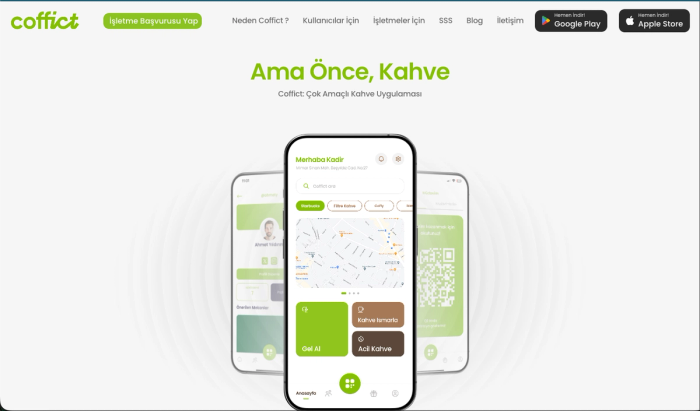
The stores add obligations of their own on top of national law. Since 31 August 2026, new apps and updates on Google Play must target Android 16 (API level 36) or higher, and every Play app must keep an accurate Data safety form that covers what third-party libraries and SDKs collect; apps that do not comply face enforcement such as blocked updates or removal. Apps with sign-up must let users start account deletion inside the app on iOS, and Google also requires a web link for deletion requests. On the national side, the AZLP enforces Montenegro's 2008 Law on Personal Data Protection today, while a new GDPR-aligned law applies from 19 March 2027, so privacy flows built now should be simple to revisit. Agents draft store declarations from the dependency list and an engineer checks them against what the app does. Our React Native work includes TrendinChat (trendin.chat) and Coffict (coffict.com), both for clients in Türkiye.

Questions

The things people ask before starting.

What does it cost to build an iOS and Android app for Montenegro?

Work runs as AI-accelerated development, starting from $2,000 per month, with scope agreed in writing. For Montenegro the scope drivers are specific: Cyrillic and Latin script support, consent handling for every SDK that touches the device, and the seller data the Tax Administration report needs if the app is a marketplace. Those are covered in the discovery call, after which we set scope and budget down in writing.

Should an app in Montenegro support both Cyrillic and Latin script?

Usually yes for an app aimed at the general public, since the Constitution gives the two alphabets equal status. Treating script as a setting from the start costs little; adding it after launch means revisiting every screen, font and stored string. Albanian is also one of the languages in official use, which matters if your audience includes Albanian speakers.

Does Montenegro have an accessibility law for mobile apps yet?

Not one transposing the European Accessibility Act. That law had not yet been drafted in July 2026: on 23 July 2026 the Ministry of Human and Minority Rights annulled its public call for three NGO representatives to join the working group that is to draft a Law on accessibility requirements for products and services. Screen reader labels, scalable text and contrast are still easier to build in than to retrofit.

When is the seller report for a marketplace app in Montenegro due?

Each report is due by 31 January of the year after a seller is identified as reportable. The duty comes from the Rulebook on reporting on digital platform users and covers mobile apps that connect sellers with other users, so the seller data and due diligence status it needs should be collected at onboarding rather than reconstructed at year end.

How it starts

What happens after you write to us.

  1. 01

    You describe the product

    One paragraph on what you are building, roughly when you need it, and who it is for. No brief, no form with fifteen fields.

  2. 02

    You get a reply within a day

    From the engineer who would do the work, not a sales team. If we are not the right fit we say so, and where possible we point you somewhere better.

  3. 03

    You get a scoped plan

    Scope, price and timeline in writing before anything is committed. You decide with the numbers in front of you.

No long contract to begin, no lock-in to our tooling, and the code is yours from the first commit.

Start a conversation
Contact

Looking for an engineering partner for the long haul?

A short note about the product, the timeline and who it is for is enough to start. You will hear back from the engineer who would do the work, not a sales team.

Ankara / Türkiye · Working across European and US time zones