Skip to content
Romania · Agentic software engineering

Agentic Software Development for Teams in Romania

In winter, Romania runs one hour behind Ankara; in summer, the two clocks match. That leaves your team sharing 8 or 9 hours of a normal working day with an engineering partner in Türkiye, so the clock is not the hard part. The harder questions are elsewhere: personal data reached from outside the EU, national ID numbers sitting in your database, vulnerability reporting duties, and who checks the code an AI agent wrote.

Curiosive is an engineering studio in Ankara, Türkiye, where AI coding agents do the volume and senior engineers review every line. We build a product end to end, or work alongside your team as a long-term partner. Agents handle scaffolding, migrations, test coverage and refactors across hundreds of files; engineers own data models, auth, permissions and anything touching personal data. The code is yours from the first commit, with repository, database and hosting accounts opened in your name or connected to ones you already hold.

24
published portfolio projects
5+
years building for production
12
countries the work runs in
100%
of code read by a senior engineer
1 day
to hear back, from the engineer

Working hours between Romania and Ankara, winter and summer

Ankara stays on UTC+3 all year, because Türkiye does not use daylight saving time. Romania is on GMT+2 in winter, so Ankara is one hour ahead: our 09:00 start is 08:00 for you, our 18:00 finish is 17:00, and your 09:00 is our 10:00. That gives 8 shared hours in a standard 09:00 to 18:00 day. In summer the country moves to GMT+3, the clocks match, and all 9 hours overlap. Work runs on Türkiye business hours, so we do not offer evening availability, and with this much overlap there is rarely a reason to want it. The rhythm stays the same all year: decisions recorded in writing, a releasable increment every week, and one short weekly call placed wherever it suits your team inside the shared day.

GDPR transfers from Romania when engineers in Türkiye touch data

Letting engineers in Türkiye reach your customer data transfers it outside the EU. As of 2 October 2026, Türkiye is not on the European Commission's list of adequacy decisions, so the transfer needs another GDPR Chapter V tool, such as Standard Contractual Clauses. The clauses in Commission Implementing Decision (EU) 2021/914 come in four modules, including controller to processor, the usual fit when a client hires a studio to process data for it. Under Clause 14, both parties warrant that they have no reason to believe the destination country's laws and practices prevent the importer from complying. EDPB Guidelines 05/2021 add a point teams often miss: remote access from a third country is a transfer even when it only means displaying personal data on a screen for support or troubleshooting. Building and testing on synthetic or masked data keeps most routine engineering away from personal data altogether.

Romania's Law 190/2018, ANSPDCP and CNP numbers in your system

The GDPR is supplemented nationally by Law no. 190 of 18 July 2018, and the supervisory authority is ANSPDCP (www.dataprotection.ro). Article 4 of that law matters to anyone storing national identification numbers: a controller that processes the personal numeric code (CNP), ID card series and number, passport, driving licence or health insurance number on the basis of legitimate interest must put specific safeguards in place. Those are appropriate technical and organisational measures, a data protection officer, defined storage and deletion periods, and periodic training for the staff who process the data. In engineering terms we treat these fields as their own class: access restricted by role, retention enforced by scheduled jobs rather than good intentions, and kept out of logs, analytics events and test fixtures. It is worth confirming your legal basis and retention periods with a lawyer before the schema is final.

Cybersecurity duties in Romania under GEO 155/2024 and NIS2

Romania's cybersecurity framework is Government Emergency Ordinance 155/2024, published in Monitorul Oficial no. 1332 of 31 December 2024 and amended by its approval law. Under it, ICT product and service producers and providers that are essential or important entities must report to DNSC every vulnerability they find, or that third parties report, in their products or services, and fix it within a deadline agreed with DNSC. NIS2, which Member States had to apply from 18 October 2024, requires in-scope entities to address supply chain security, including their relationships with direct suppliers and service providers. An engineering partner sits inside that chain, so on our side security is a gate: every change is read before it merges for secrets handling, input validation, access control and dependency risk, and continuous integration re-runs the checks on every change.

How agent-written code is reviewed, contracted and priced

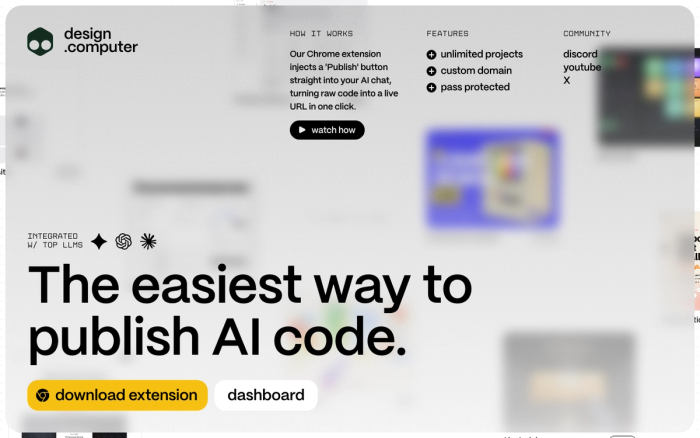
An engineer writes a scoped task with acceptance criteria and the boundaries the agent must not cross. Claude Code or Cursor then works inside the repository: it reads the existing code, plans, implements, writes or updates tests, and runs the checks before proposing a change. A senior engineer reviews every diff, which is what lets agents take on migrations or a refactor across hundreds of files without the codebase drifting. It moves engineering hours toward design and review; it does not move accountability. For a client in Romania we built design.computer, which publishes AI-generated code in one click through a Chrome extension backed by Cloudflare Workers, R2 and D1. We contract cross-border and price in US dollars: AI-accelerated development starts from $2,000 per month, scoped in writing.

Questions

The things people ask before starting.

What is the time difference between Romania and Ankara for working hours?

One hour in winter and none in summer. Ankara stays on UTC+3 all year, while local time is GMT+2 in winter and GMT+3 in summer. A 09:00 to 18:00 day there shares 8 hours with Ankara in winter and all 9 in summer, with no evening work needed.

Is outsourcing software development from Romania to Türkiye allowed under GDPR?

Yes, with a transfer tool in place. Türkiye has no EU adequacy decision as of 2 October 2026, so access to personal data from there needs safeguards such as the 2021 Standard Contractual Clauses. Remote access counts as a transfer too, so work on synthetic data where you can.

Do Romanian companies pay VAT on software services bought from a foreign supplier?

Usually yes, through the reverse charge. When a supplier with no establishment in the country provides services whose place of supply is there, Romanian VAT applies unless an exemption does. A taxable person there that is not registered, and not required to register, for VAT pays it and files a special return by the 25th of the following month.

Why hire a studio in Türkiye when Romania has a large tech sector?

Because the case is about working model, not scarcity. The European Commission's Digital Decade 2025 report puts Romania's ICT sector at 7.1% of GDP in 2023 and cites Startup Genome valuing Bucharest's start-up ecosystem at EUR 35 billion that year. What we add is agent-driven volume under senior review, a weekly releasable increment and no lock-in.

How it starts

What happens after you write to us.

  1. 01

    You describe the product

    One paragraph on what you are building, roughly when you need it, and who it is for. No brief, no form with fifteen fields.

  2. 02

    You get a reply within a day

    From the engineer who would do the work, not a sales team. If we are not the right fit we say so, and where possible we point you somewhere better.

  3. 03

    You get a scoped plan

    Scope, price and timeline in writing before anything is committed. You decide with the numbers in front of you.

No long contract to begin, no lock-in to our tooling, and the code is yours from the first commit.

Start a conversation
Contact

Looking for an engineering partner for the long haul?

A short note about the product, the timeline and who it is for is enough to start. You will hear back from the engineer who would do the work, not a sales team.

Ankara / Türkiye · Working across European and US time zones



