Skip to content
Liechtenstein · Agentic mobile development

Mobile App Development for Teams in Liechtenstein

StatCounter's September 2026 figures give iOS 67.33% of the mobile operating system market in Liechtenstein and Android 32.67%. For a team launching an app there, the App Store build makes most first impressions, yet a third of the market still arrives through Google Play. Both store listings, German copy and the country's rules on storing or reading data on a device all need to be right in the first release, not patched in after review.

We are Curiosive, an AI-native software studio working remotely from Ankara, Türkiye, where coding agents write code and senior engineers review every line before it ships. React Native gives one TypeScript codebase for both stores. Agents handle screens, navigation, list rendering, form validation, tests and first drafts of store metadata. Engineers keep the parts that can hurt users: token storage in Keychain and Keystore, auth refresh, entitlement checks, permission prompts and the privacy declarations each store reviews.

24
published portfolio projects
5+
years building for production
12
countries the work runs in
100%
of code read by a senior engineer
1 day
to hear back, from the engineer

Building for iOS and Android users in Liechtenstein

With iOS at 67.33% and Android at 32.67% in StatCounter's September 2026 data, an iOS-only launch in Liechtenstein would leave out roughly a third of the market it measures, while an Android-first plan would test the product on the minority. React Native lets one codebase cover both, so the split decides where testing time goes rather than which app gets built. Language is the other early decision. Article 6 of the Constitution of 5 October 1921 makes German the state and official language, so German copy belongs in the first release, not in a later translation pass. We set up string files and locale-aware date and number formatting from the start, have agents move hard-coded text into them, and keep a German store listing next to the app. Copy that needs judgement, such as consent wording and account or payment errors, is reviewed by a person.
Since 1 February 2025, Art. 61(4) of Liechtenstein's Kommunikationsgesetz (KomG) has applied to any storage of, or access to, data on any kind of user device, including LocalStorage, Web Storage, reading advertising and device IDs, and fingerprinting. According to the Datenschutzstelle, explicit consent is required where this is done for profiling, tracking users or personalised marketing, including social media plugins and advertising networks. For cookies it adds that rejecting must be as easy as accepting, otherwise the consent is invalid. In a mobile app this lands on analytics, attribution and advertising SDKs. Our engineers list every SDK the app pulls in, decide which ones read identifiers or track, and keep those off behind a consent screen where accept and reject carry equal weight. Agents can write that screen and its tests. Whether an SDK may start before consent is a decision an engineer signs off.

If an app is offered directly to children, age has to be settled before the sign-up flow is designed. GDPR Article 8 sets 16 as the default age for a child's own consent and lets states go lower, but not below 13. The Datenschutzstelle states that in Liechtenstein a child's own consent is valid only once the child has turned 16, and for children under 16 parental consent must be obtained. That shapes the age question and which features stay locked until a parent confirms. Accessibility depends on who the client is. The Behindertengleichstellungsgesetz (BGlG, Art. 21a and 21b) transposes the Web Accessibility Directive (EU) 2016/2102 and requires the websites and mobile apps of public bodies to be perceivable, operable and understandable, among other requirements, with conformity presumed for content meeting harmonised standards and monitoring by the Amt für Soziale Dienste. For other clients that law does not set the bar, but screen reader labels and scalable text cost far less on the first screen than retrofitted on the fiftieth.

App Store and Google Play review for apps launched in Liechtenstein

With two thirds of the market on iOS, App Store review decides when most users in Liechtenstein get each release, and small omissions there cost weeks. Since 30 June 2022, apps that support account creation must let users start account deletion inside the app, and temporary deactivation does not count. Since 1 May 2024, every new or updated upload needs a privacy manifest declaring approved reasons for each required-reason API the code uses. Apple's age ratings now include 13+, 16+ and 18+, with new questions every app had to answer by 31 January 2026. On Google Play, every app must complete the Data safety form and keep it accurate, offer both an in-app path and a web link for account deletion. Since 31 August 2026, new apps and updates there must also target Android 16 (API level 36) or higher. Agents draft metadata and manifests from the code; an engineer checks every declaration against what the app actually does.

Questions

The things people ask before starting.

Do we need both an iOS and an Android app for users in Liechtenstein?

Usually, yes. StatCounter gave iOS 67.33% and Android 32.67% of the mobile operating system market in Liechtenstein in September 2026, so a single-platform launch leaves out a large part of it. React Native lets one TypeScript codebase ship to both stores, so the second platform mostly adds testing rather than a second build.

Does an app in Liechtenstein need consent before loading analytics or ad SDKs?

It does when those SDKs store or read data on the device for profiling, tracking or personalised marketing, according to the Datenschutzstelle's reading of Art. 61(4) KomG. Tracking SDKs should stay off until the user agrees, and refusing should be as easy as agreeing. How this applies to a specific app is worth confirming with a lawyer.

Is the time difference with Türkiye a problem for an app team in Liechtenstein?

Not much. Our working day in Ankara starts at 07:00 Liechtenstein time in winter and 08:00 in summer, so most of a local office day is shared with us. Decisions and review notes are written down, a releasable increment arrives every week and there is one short weekly call.

What mobile apps has Curiosive shipped?

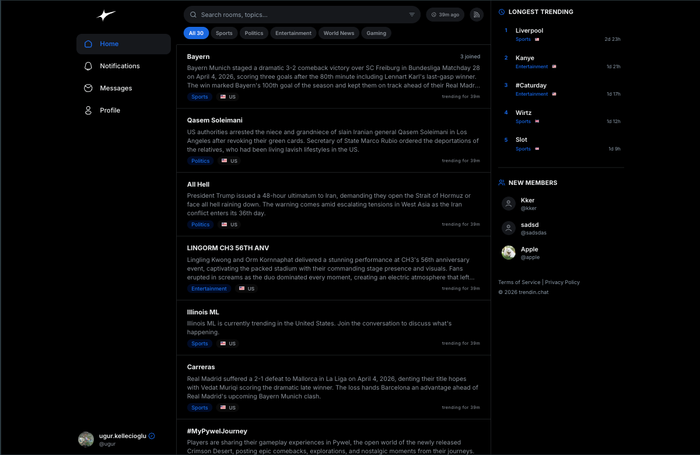
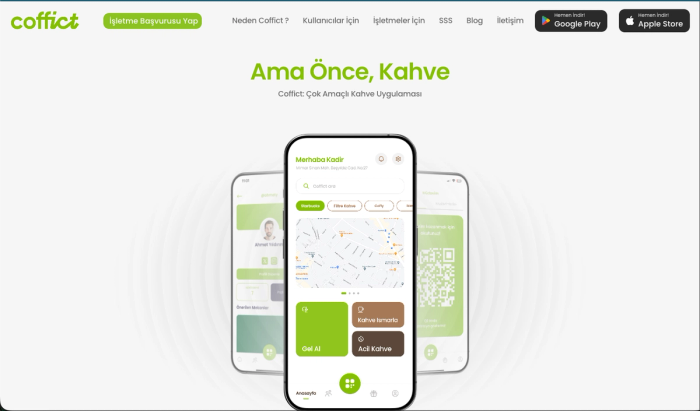
Our React Native work includes TrendinChat (trendin.chat), real-time trending-topic chat rooms built in two weeks, and Coffict (coffict.com), a coffee ordering and loyalty app with order ahead, rewards and cafe discovery, both for clients in Türkiye. Roblox Den (robloxden.com), for a client in the United Kingdom, has mobile apps alongside a reference site with 100,000+ game codes.

How much does it cost to build a mobile app with Curiosive?

Work runs as AI-accelerated development, starting from $2,000 per month, with scope agreed in writing. Both figures are US dollar starting points rather than quotes, and there is no long contract to begin.

How it starts

What happens after you write to us.

  1. 01

    You describe the product

    One paragraph on what you are building, roughly when you need it, and who it is for. No brief, no form with fifteen fields.

  2. 02

    You get a reply within a day

    From the engineer who would do the work, not a sales team. If we are not the right fit we say so, and where possible we point you somewhere better.

  3. 03

    You get a scoped plan

    Scope, price and timeline in writing before anything is committed. You decide with the numbers in front of you.

No long contract to begin, no lock-in to our tooling, and the code is yours from the first commit.

Start a conversation
Contact

Looking for an engineering partner for the long haul?

A short note about the product, the timeline and who it is for is enough to start. You will hear back from the engineer who would do the work, not a sales team.

Ankara / Türkiye · Working across European and US time zones